Execution in logistics doesn't fail because people are lazy; it fails because of fragmentation. In high-stakes logistics: where every minute of dwell time erodes margin: the most significant risk to continuity isn't a broken truck or a grounded plane. It is the loss of "tribal knowledge" when key personnel move on.
When a seasoned dispatcher, a cargo manager, or a prime contractor’s lead exits the frame, they often take the "unwritten rules" of the operation with them. If your workflow lives in their inbox, your business is one resignation away from a breakdown.
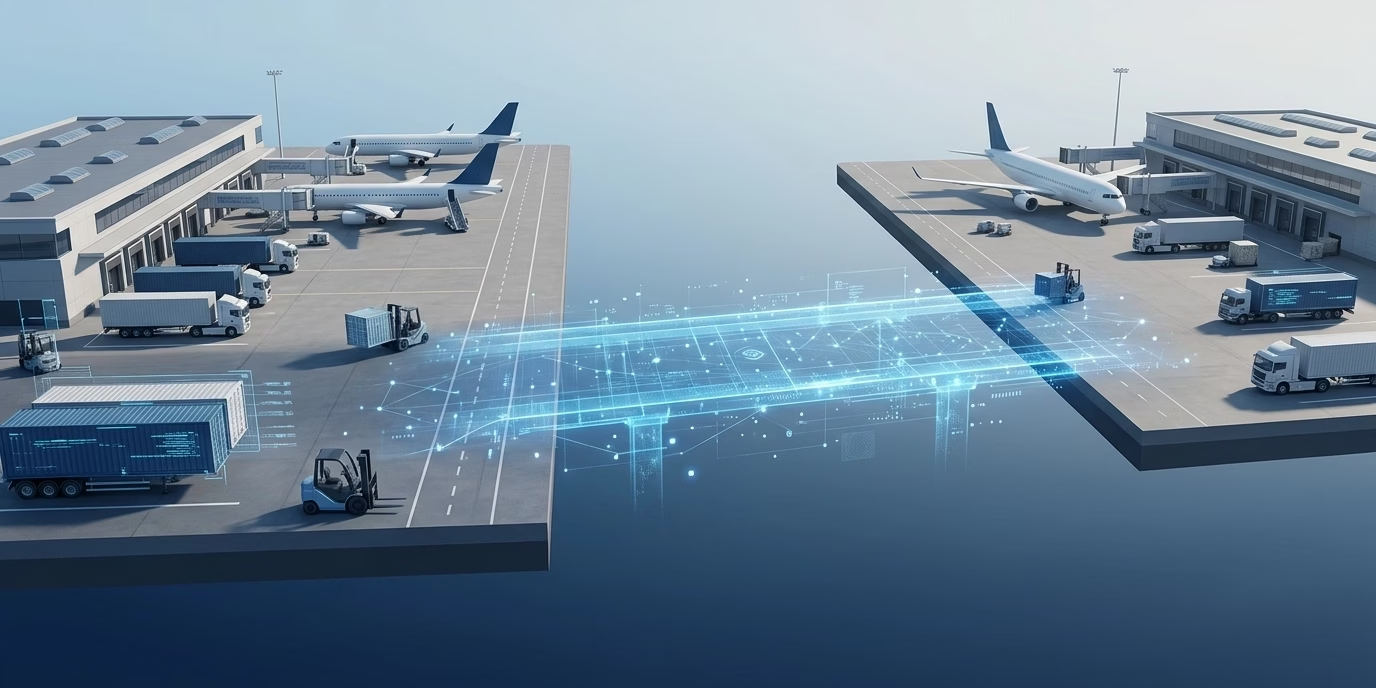
Operational visibility acts as the safety net for these workforce transitions. It moves the intelligence of the operation out of the individual’s head and into a digital execution layer. That same principle applies to broader workforce resilience initiatives, including the Workforce Innovation Network (WIN), where coordination, knowledge transfer, and operational continuity must be structured rather than left to informal processes.
The High Cost of the "Tribal Knowledge" Trap
In most multi-stakeholder environments: think airports, infrastructure projects, or airline networks: work revolves around a series of manual handoffs. These handoffs are governed by spreadsheets, frantic phone calls, and siloed email threads.
When staff turnover occurs, the new hire isn't just learning a role; they are trying to piece together a puzzle where half the pieces are missing. This leads to:
- Execution Silos: Knowledge is trapped with specific individuals.
- Handoff Failures: Shipments stall because the "next step" was only known to the person who left.
- Performance Blind Spots: Without historical data, new staff can’t identify if a delay is an anomaly or a chronic issue.
Visibility is the only antidote to this fragmentation. By digitizing the workflow, you ensure that the process remains consistent even when the people change.

Standardization as a Continuity Engine
True workforce resilience isn't just about hiring faster; it’s about creating a system where a new hire can be productive from day one. At ImEx Cargo, we address this through Plug-In Freight Ops™, a digital execution infrastructure that sits above existing systems to standardize how work gets done.
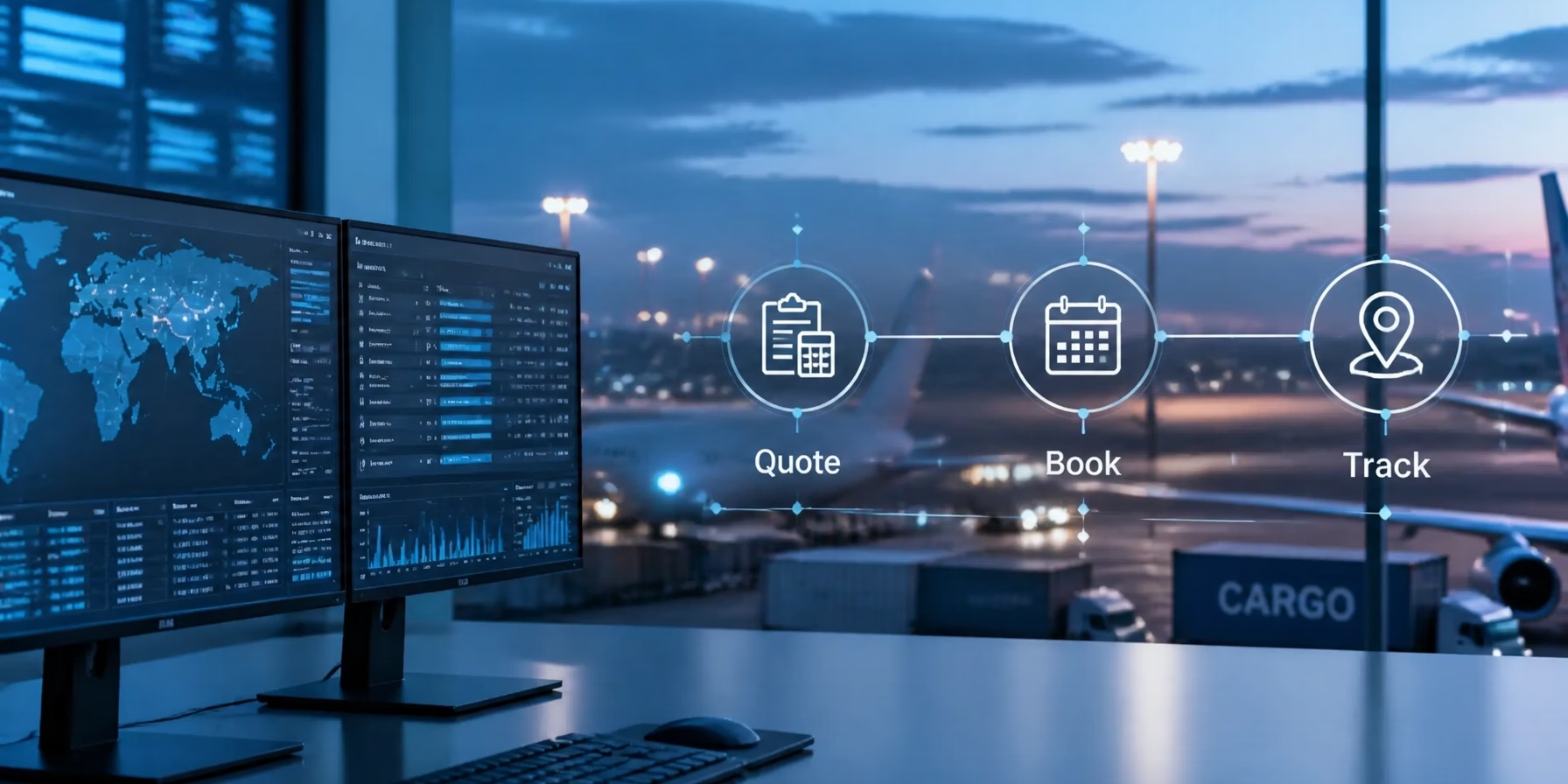
Rather than relying on a dispatcher's memory, the platform locks in a structured lifecycle for every shipment: Quote → Book → Track → Deliver.
When a workflow is standardized, the "how" is already decided. A new employee doesn’t need to guess which trucking partner to call or how to format a status update. The system guides the execution. This structural oversight ensures that airline GSA execution and complex freight moves maintain a steady rhythm during personnel shifts.
This same model also supports structured onboarding and continuity across workforce programs tied to the Academy and broader workforce ecosystem infrastructure, where repeatable execution matters as much as training itself.
Visibility: The Infrastructure of Accountability
Visibility is often confused with "tracking a dot on a map." While tracking is part of it, true operational visibility is about seeing the status of the execution across multiple stakeholders.
When you have a centralized coordination layer, you gain a real-time audit trail. If a handoff from a trucker to a ground handler is delayed, the system flags it. For a manager overseeing a transition, this is a dashboard of truth. You can see where the new team is struggling and where the process is breaking down before it impacts the customer.

This level of oversight is particularly critical for government and infrastructure programs where compliance and DBE (Disadvantaged Business Enterprise) participation are mandatory. Visibility ensures that even as staff changes, the reporting and accountability requirements for these programs remain intact. The same oversight model is increasingly relevant to workforce development partnerships that need clear execution standards, measurable outcomes, and durable coordination across institutions and employers.
Structured Handoffs: Beyond Email and Spreadsheets
The most dangerous moment in any logistics cycle is the handoff. This is where execution usually breaks down between airlines, truckers, and handlers.
By utilizing a platform like Plug-In Freight Ops™, these handoffs are digitized. Instead of "I think it’s at the warehouse," managers see a verified status in a centralized portal.
- Real-time Visibility: Instant status updates accessible to all authorized stakeholders.
- Structured Handoffs: Clear accountability at every change of custody.
- Audit-Ready Data: A permanent record of every touchpoint, which is invaluable for training and performance reviews.

This digital paper trail means that a supervisor can step into a project mid-stream and understand exactly what has happened and what needs to happen next. It eliminates the "information gap" that traditionally haunts workforce transitions.
Activating the Ecosystem: Onboarding Diverse Partners
Workforce resilience also means being able to scale your partner network quickly. Whether you are activating a new DBE trucking firm or a workforce development pipeline, these partners need a clear framework to succeed.
Operational visibility provides that framework. It allows prime contractors to onboard smaller, diverse suppliers into a unified system where they can see and follow the same professional standards as the largest carriers. This workforce activation levels the playing field. It allows the ecosystem to grow without losing control over the quality of execution.
For organizations formalizing this approach, Workforce Activation Pilots create a practical path to test execution workflows, while Employer Partners help extend the operating network needed to support continuity across real-world logistics environments.
When the workflow is the "source of truth," you can diversify your workforce and partner base with confidence, knowing the system will enforce the standard.

Why Visibility Fosters a More Resilient Workforce
Ultimately, visibility reduces the stress on the people actually doing the work. High-turnover environments are often the result of "hero culture": where individuals are forced to perform miracles daily to overcome bad data and poor communication.
When you provide a clear, visible infrastructure for execution:
- Burnout Decreases: Staff aren't spending 4 hours a day on "where is my freight?" calls.
- Training Shortens: Onboarding becomes a technical walkthrough rather than a months-long apprenticeship in "how we do things here."
- Speed Increases: Decisions are made based on data, not guesses.
Building Your Safety Net
Workforce transitions are an inevitable part of the logistics lifecycle. But the disruption they cause is optional. By investing in an execution coordination layer like Plug-In Freight Ops™, you are building an infrastructure that survives the departure of any single individual.
You aren't just shipping freight; you are managing a coordinated workflow that demands visibility, accountability, and precision.
Is your operation one resignation away from a breakdown?
We typically address these challenges through a focused pilot program designed to map your existing workflows and identify where visibility can secure your continuity. In workforce-heavy environments, that can also include aligning execution design with the Workforce Innovation Network (WIN), targeted Workforce Activation Pilots, and broader Workforce Ecosystem Infrastructure.
Learn more about Plug-In Freight Ops™, explore our Academy, or contact us to walk through how this would apply in your specific environment.