Logistics execution is entering a phase where tribal knowledge is no longer enough to maintain margins. In today’s environment, execution breaks down not because of a lack of effort, but because of a lack of interoperable data. As we look toward 2026, the gap between organizations that can execute at scale and those that struggle with fragmentation is widening.
The differentiator is no longer just the hardware or the assets: it is the digital proficiency of the workforce and their ability to leverage Artificial Intelligence as an operational co-pilot. At ImEx Cargo, we view digital skills not as an IT requirement, but as a core pillar of Workforce Resilience.
The Execution Gap: Why Traditional Training Fails
For decades, logistics training focused on manual processes: how to book a load, how to track a shipment via phone or email, and how to navigate individual carrier portals. However, these siloed skills are becoming liabilities in a world of multi-stakeholder logistics.
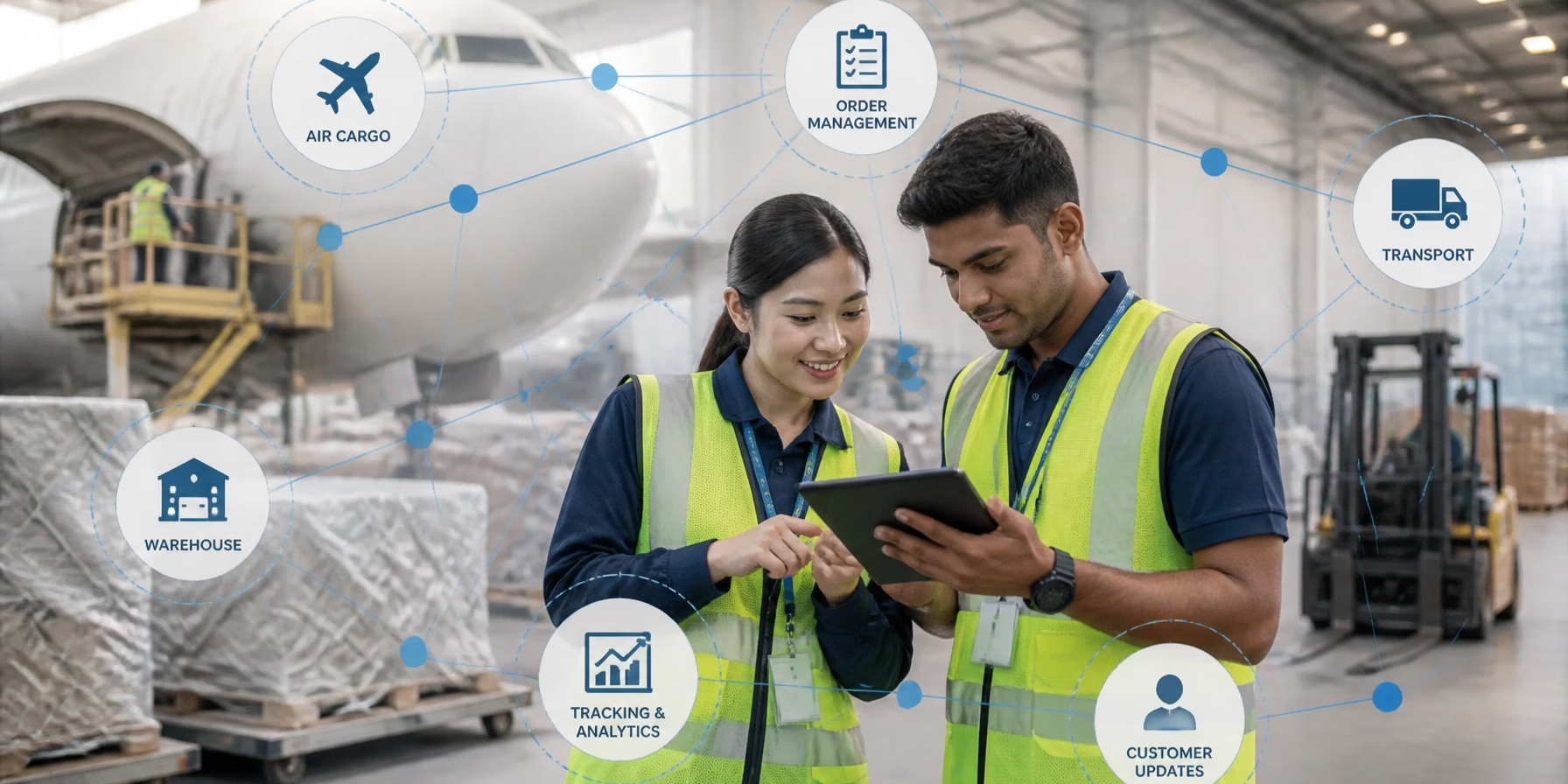
When execution is fragmented across airlines, GSAs, truckers, and government agencies, a team that only knows manual processes becomes a bottleneck. They spend 80% of their time on "noise": data entry, status chasing, and reconciling disparate reports: leaving only 20% for high-value decision-making.
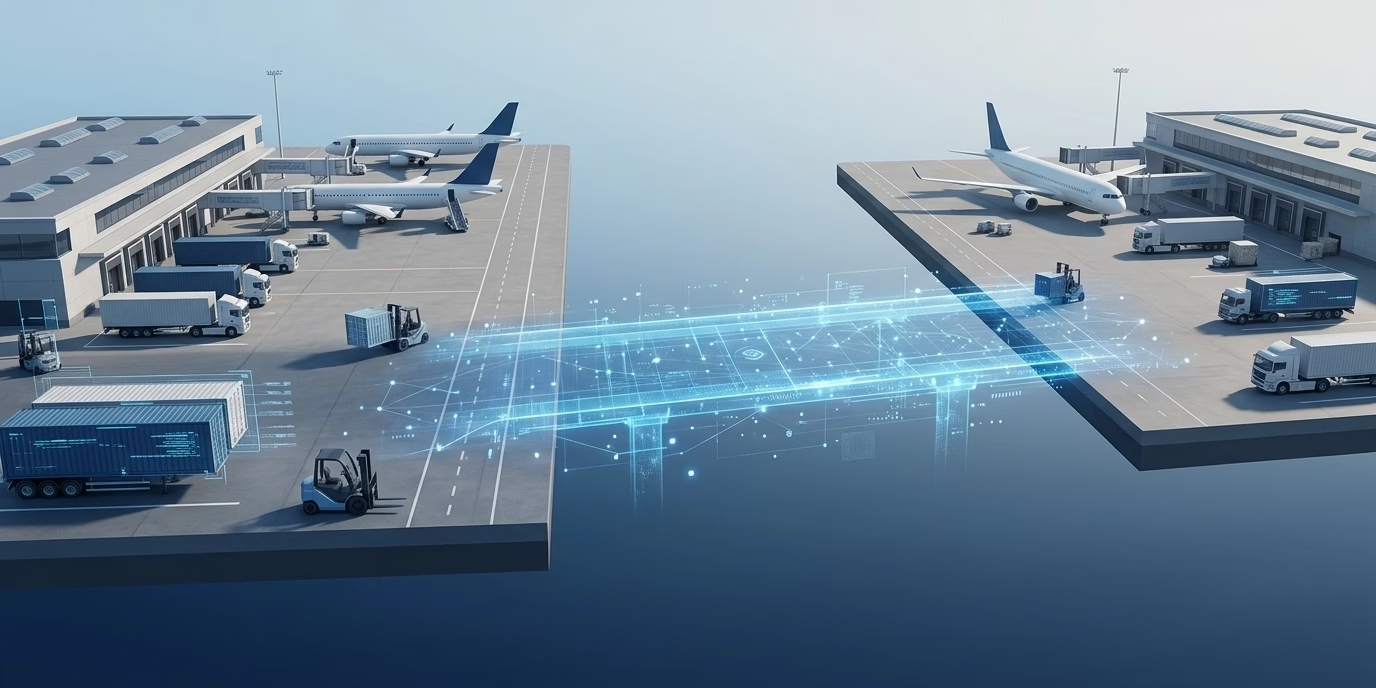
The shift toward AI adoption is designed to flip this ratio. But AI cannot function in a vacuum of unstructured data. To future-proof your team, you must first provide them with a digital execution infrastructure that standardizes the workflow. This is where Plug-In Freight Ops™ bridges the gap.
Moving from Firefighting to Exception Management
The goal of AI adoption in logistics isn't to replace the operator; it’s to evolve them into an Exception Manager.
In a traditional setup, a logistics coordinator monitors every shipment equally. In an AI-assisted environment, the system monitors every shipment and only alerts the coordinator when a threshold is breached or a delay is predicted.
Upskilling for 2026 involves three core shifts:
- From Data Entry to Data Validation: Teams must move from manually typing HAWBs to managing the digital handoffs between stakeholders.
- From Tracking to Predictive Oversight: Instead of asking "Where is it?", teams use AI-driven insights to ask "What happens if this is late?"
- From Siloed Work to Ecosystem Coordination: Understanding how their piece of the puzzle fits into the broader infrastructure, including government freight programs and DBE networks.

The Role of Plug-In Freight Ops™ in Upskilling
Adopting new technology often creates friction. Teams are rightfully wary of complex "all-in-one" platforms that require months of training. Plug-In Freight Ops™ is designed as a coordination layer that sits above existing systems. It doesn't replace what your team uses; it standardizes how they execute.
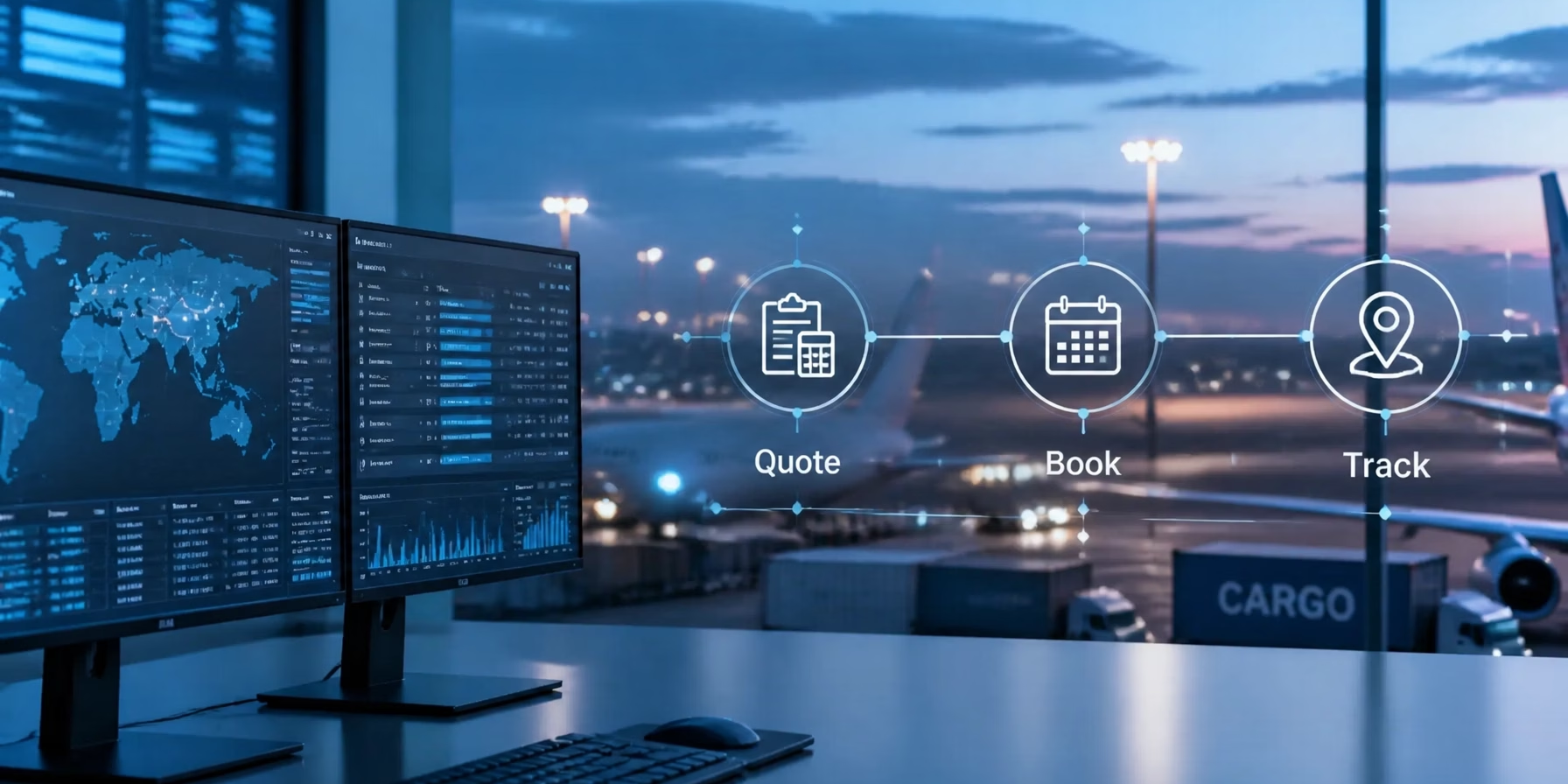
By providing a unified portal for quoting, booking, and tracking, we lower the barrier to digital adoption. The platform serves as the "training wheels" for digital execution, guiding the workforce through structured handoffs and providing real-time visibility that was previously locked in email chains. For organizations building formal workforce capabilities around these workflows, the Academy and Workforce Activation Pilots create a practical path to develop digital skills inside live execution environments.

Building Workforce Resilience through Diverse Ecosystems
A resilient workforce is not just a tech-savvy one; it is a diverse and inclusive one. As part of our Workforce Resilience series, we emphasize that digital skills must be accessible across the entire supply chain: especially for DBE (Disadvantaged Business Enterprise) partners and small-scale truckers.
When you empower a diverse supplier network with digital tools, you reduce the systemic risk of your entire operation. Plug-In Freight Ops™ activates these partner ecosystems, allowing prime contractors and infrastructure firms to meet compliance goals while ensuring that every stakeholder: regardless of their size: is operating on the same execution layer. This model aligns with our broader Workforce Innovation Network, including Employer Partners, Workforce Development Partnerships, and the underlying Workforce Ecosystem Infrastructure needed to coordinate talent, training, and operational execution across stakeholders.

AI Adoption: The 2026 Roadmap
As AI becomes embedded in logistics co-pilots, organizations must prioritize "Digital Literacy" as a key performance indicator. This doesn't mean every logistics manager needs to be a data scientist. It means they need to understand:
- System Interoperability: How data moves from a GSA to a trucking provider without human intervention.
- Algorithmic Trust: When to rely on AI-generated ETAs and when to intervene based on operational nuance.
- Audit-Ready Oversight: How to use digital execution logs to provide transparency to government and commercial stakeholders.
The companies that succeed in the next 24 months will be those that view AI as a tool for human empowerment, not just cost-cutting. By reducing the cognitive load of manual tracking, you free your best talent to solve the complex problems that AI still can't touch: relationship management, strategic negotiation, and crisis resolution.

Future-Proofing Your Operation
The transition to an AI-enabled workforce doesn't happen overnight. It starts with a commitment to execution visibility and stakeholder accountability.
Waiting for "the perfect system" is a recipe for obsolescence. The path forward involves implementing a coordination layer that standardizes your current workflows today, while providing the data foundation for the AI tools of tomorrow.
At ImEx Cargo, we specialize in helping organizations bridge this gap. Whether you are managing complex infrastructure projects or high-volume air cargo networks, our platform ensures your team: and your partners: are ready for what’s next.
Next Steps for Your Team:
- Assessment: Map your current execution workflows. Where are the manual bottlenecks?
- Standardization: Implement a coordination layer to unify stakeholder communication.
- Pilot: Test AI-assisted oversight in a controlled, high-value segment of your operation.
We typically address these transitions through a focused pilot program designed to demonstrate immediate time savings and risk reduction. In workforce-intensive environments, that can also include structured activation models through our Workforce Activation Pilots.
Contact ImEx Cargo to walk through how Plug-In Freight Ops™ can be mapped to your current operation, or explore the Workforce Innovation Network for workforce resilience initiatives tied to execution performance.