For years, the logistics industry has operated under a persistent myth: that the biggest challenge is finding talent.
We pour resources into recruiting, we build talent pipelines, and we invest heavily in onboarding. But recent market intelligence and real-world results suggest something different. The problem isn’t that we can’t find people: it’s that we can’t keep them.
When transportation and logistics leaders look at their workforce data in 2026, the trend is clear. Retention is the real friction point. And if you dig beneath the surface of "better pay elsewhere" or "burnout," you find a hidden driver of employee turnover: The lack of operational visibility.
Visibility is often discussed as a benefit for the customer or a tool for the manager. But for the person on the front lines: the dispatcher, the cargo handler, the GSA coordinator: visibility is a psychological safety net. It is the difference between a high-stress day of "firefighting" and a day of confident execution.
The Anxiety of the "Black Box"
In many traditional logistics environments, information is fragmented. It lives in personal email chains, disconnected spreadsheets, and the heads of long-tenured employees.
For a new hire or even a mid-level manager, this creates a "Black Box" environment. They are responsible for outcomes: moving freight from Point A to Point B: but they lack the infrastructure to see the full lifecycle of the shipment.
When an employee can’t see the handoff from the trucker to the warehouse, or the booking status from the airline in real-time, they operate in a state of constant anxiety. They are waiting for the phone to ring with a problem they didn't see coming.

Why "Firefighting" Kills Retention
We often celebrate the "hero" in logistics: the person who stays late to solve a crisis or uses their personal relationships to bypass a bottleneck. While this is impressive, a culture built on individual heroics is unsustainable.
- Stress & Burnout: Constant crisis management leads to rapid exhaustion.
- Lack of Control: Employees feel like they are being managed by the chaos, rather than managing the cargo.
- Skill Stagnation: When 80% of a day is spent chasing information, there is no time for strategic improvement or professional growth.
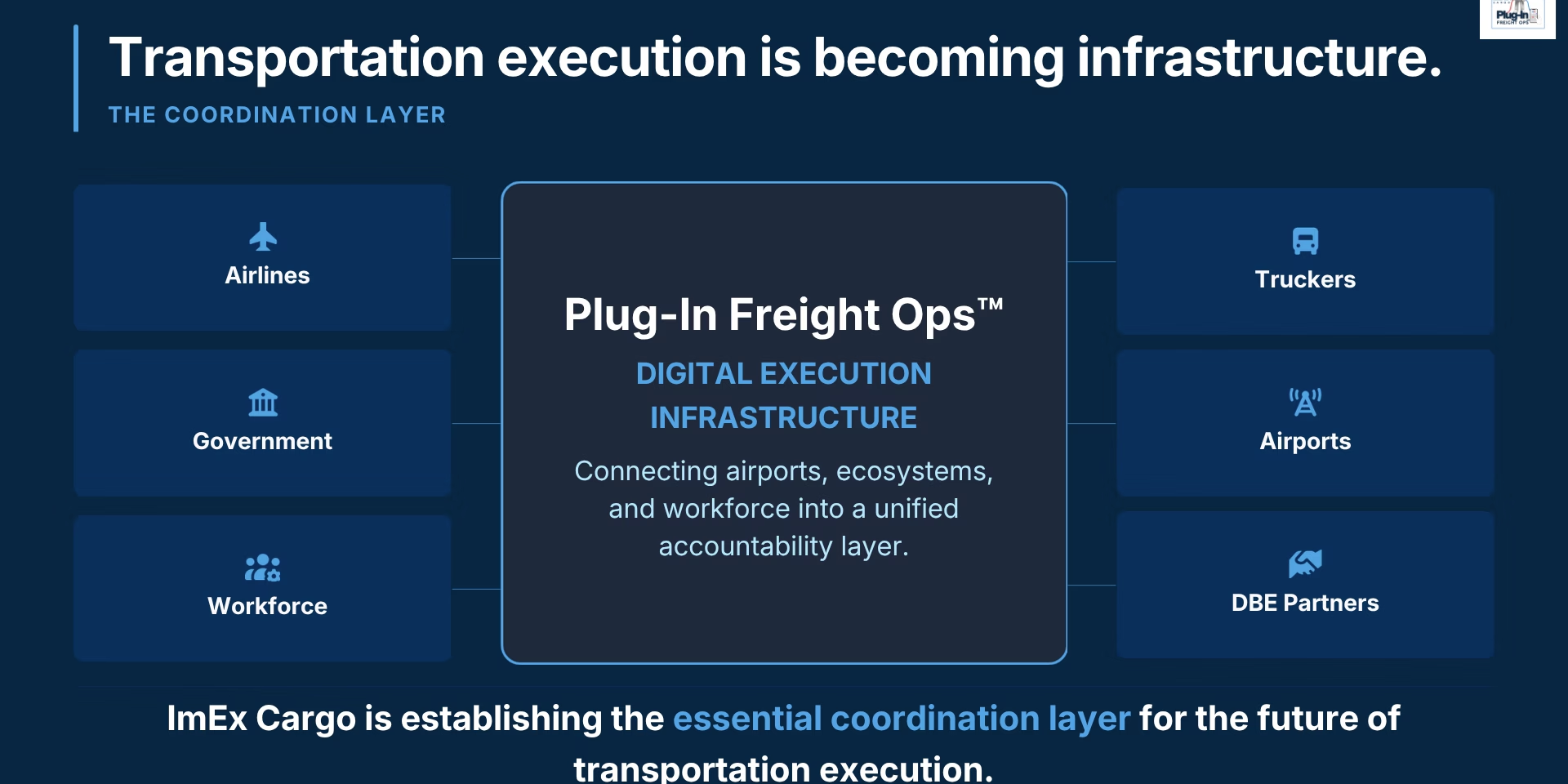
Operational visibility flips this script. When the data is centralized and the workflows are standardized through a platform like Plug-In Freight Ops™, the job shifts from reactive to proactive.
Tribal Knowledge: The Burden, Not the Badge
In logistics, "tribal knowledge" is often viewed as a badge of honor. It’s the specialized information that only "Old Joe" knows because he’s been at the airport for 30 years.
But for an organization, tribal knowledge is a massive operational risk. For the employees around "Old Joe," it’s a source of friction. They are dependent on a single individual’s availability and memory to do their own jobs effectively.
When knowledge isn't captured in an execution layer, every resignation becomes a crisis. The remaining team members are forced to pick up the pieces of a workflow they don't fully understand, leading to more errors, more stress, and: eventually: more resignations.
Captured Knowledge = Employee Autonomy
One of the greatest drivers of employee satisfaction is autonomy: the ability to make decisions and see them through.
By using Plug-In Freight Ops™ to capture every handoff, decision, and status update, you are effectively downloading the "tribal knowledge" into a digital infrastructure.
This empowers every team member to:
- Understand the "Why": They see how their specific task fits into the larger infrastructure project or shipment lifecycle.
- Make Informed Decisions: With real-time data on capacity and tracking, they don't have to guess or wait for permission.
- Onboard Faster: New hires don't have to spend years "learning the ropes" through osmosis; the ropes are clearly mapped out in the digital execution layer, supported by structured training pathways through the Academy.

Visibility as a Strategic Retention Tool
If you want to improve retention in 2026, you have to look beyond the breakroom and into the workflow. Operational visibility is a retention tool because it addresses the core needs of a modern logistics professional.
1. Confidence Through Data
Nothing breeds confidence like being the most informed person in the room. When a GSA or forwarder can look at a single dashboard and provide an instant, accurate status update to a stakeholder, their professional value is reinforced. They aren't just "moving paper"; they are managing a sophisticated digital system.
2. Reducing Friction in Handoffs
Logistics breaks down at the handoffs: the point where the freight moves from the airline to the handler, or the handler to the trucker. These gaps are where blame-shifting usually occurs.
Execution infrastructure standardizes these handoffs. When an employee knows exactly what information they need to provide and what they should receive in return, the interpersonal friction disappears. They are no longer "fighting" with partners; they are collaborating within a structured system.

3. Professionalization of the Role
As we move toward more interoperable logistics, the roles within our industry are becoming more technical and strategic.
Providing your team with state-of-the-art tools tells them that you are investing in their professional future. It shifts the perception of the job from "manual labor" to "infrastructure management," especially when paired with structured workforce pathways and Workforce Development Partnerships.
The Shift: From Training People to Empowering Teams
Most workforce initiatives focus on training individuals. But in a complex, multi-stakeholder environment, a well-trained individual is only as good as the system they work within. That is why the shift has to be toward coordinated execution environments like the Workforce Innovation Network (WIN) and the supporting Workforce Ecosystem Infrastructure.
If you put a highly trained professional into a fragmented, low-visibility environment, they will eventually leave out of frustration.
The real opportunity lies in Building Workforce Resilience. This means creating an environment where:
- The business doesn't walk out the door when an employee does.
- Operational knowledge is a shared asset, not a private hoard.
- Visibility is the default, not a luxury.

Moving Toward Operational Resilience
At ImEx Cargo, we’ve lived the problem. We’ve seen how the cycle of "hire, train, lose" stalls growth and creates unnecessary risk. That experience is why we built Plug-In Freight Ops™.
It isn't just about tracking a box; it's about tracking the execution. It’s about ensuring that every stakeholder: from the prime contractor to the DBE supplier to Employer Partners: has the visibility they need to be successful and the confidence to stay.
When knowledge lives in your infrastructure rather than just in your employees' heads, you reduce your dependency on "individual heroics" and start building an organization that can scale.
Are you ready to move from firefighting to focused execution?
We typically address these challenges through focused Workforce Activation Pilots designed to map your existing workflows into a unified execution layer. We can walk through how this would apply specifically to your airline, GSA, or infrastructure project.