In the global race for air cargo dominance, the industry has become obsessed with a single metric: speed. We celebrate faster pricing, instantaneous booking, and lightning-fast data exchange. We invest millions in API-connected systems and real-time visibility dashboards, believing that if we can just see the cargo moving faster on a screen, the problem of logistics friction is solved.
But here is the uncomfortable truth: Air freight rarely breaks because information moves too slowly. It breaks in the space between information and execution.
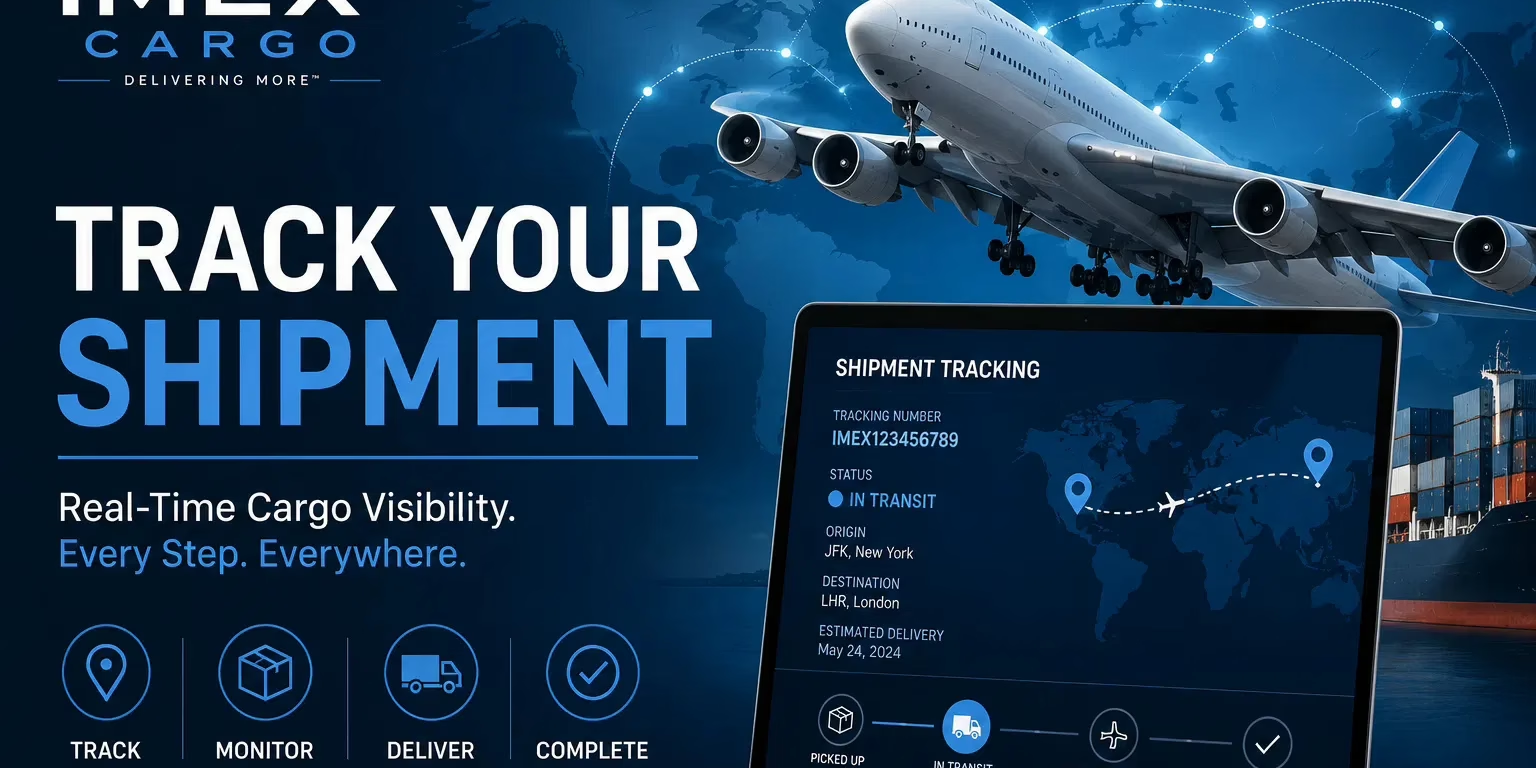
A shipment can have perfect real-time visibility, automated alerts, and the most advanced tracking software on the market: and it can still fail to reach its destination on time. Why? Because cargo does not move through software alone. It moves through handoffs.
The Anatomy of the Execution Gap
The "execution gap" is the invisible space between stakeholders where ownership, timing, and accountability often become fragmented.
Consider the typical journey of a single air freight shipment. It transitions through a gauntlet of entities:
- Airlines managing capacity and flight schedules.
- General Sales Agents (GSAs) acting as the commercial face of carriers.
- Freight Forwarders organizing the end-to-end flow.
- Trucking Providers handling the critical first and last miles.
- Warehouses & Ground Handlers managing physical storage and aircraft loading.
- Customs & Government Agencies ensuring regulatory compliance.
Every one of these handoffs introduces a new layer of risk. This risk doesn't exist because people are unwilling to do the work. It exists because these stakeholders are often operating in disconnected systems. When the cargo moves from the warehouse to the tarmac, or from the aircraft to the truck, the digital "thread" often snaps.

Why Visibility Isn’t the Same as Execution
For years, "visibility" has been the holy grail of supply chain management. The logic was simple: if we know where the cargo is, we can fix the problems.
However, visibility is passive. Knowing a shipment is delayed at a terminal in JFK doesn't move the shipment. Knowing that a ground handler is understaffed doesn't re-route the freight. To bridge the execution gap, the industry must move beyond visibility and toward Execution Certainty.
Execution Certainty is the proactive knowledge of:
- Ownership: Who specifically owns the next operational step?
- Action: What precise action is required right now?
- Risk: Where are the delays forming before they become service failures?
- Intervention: When is human or automated intervention needed to keep the workflow moving?
The next competitive advantage in cargo will not come from better visibility alone. It will come from the ability to connect data, decisions, and execution into a single, coordinated flow.
Introducing Digital Execution Infrastructure
As the logistics landscape becomes increasingly fragmented, a new category of technology is emerging to solve the handoff problem: Digital Execution Infrastructure.
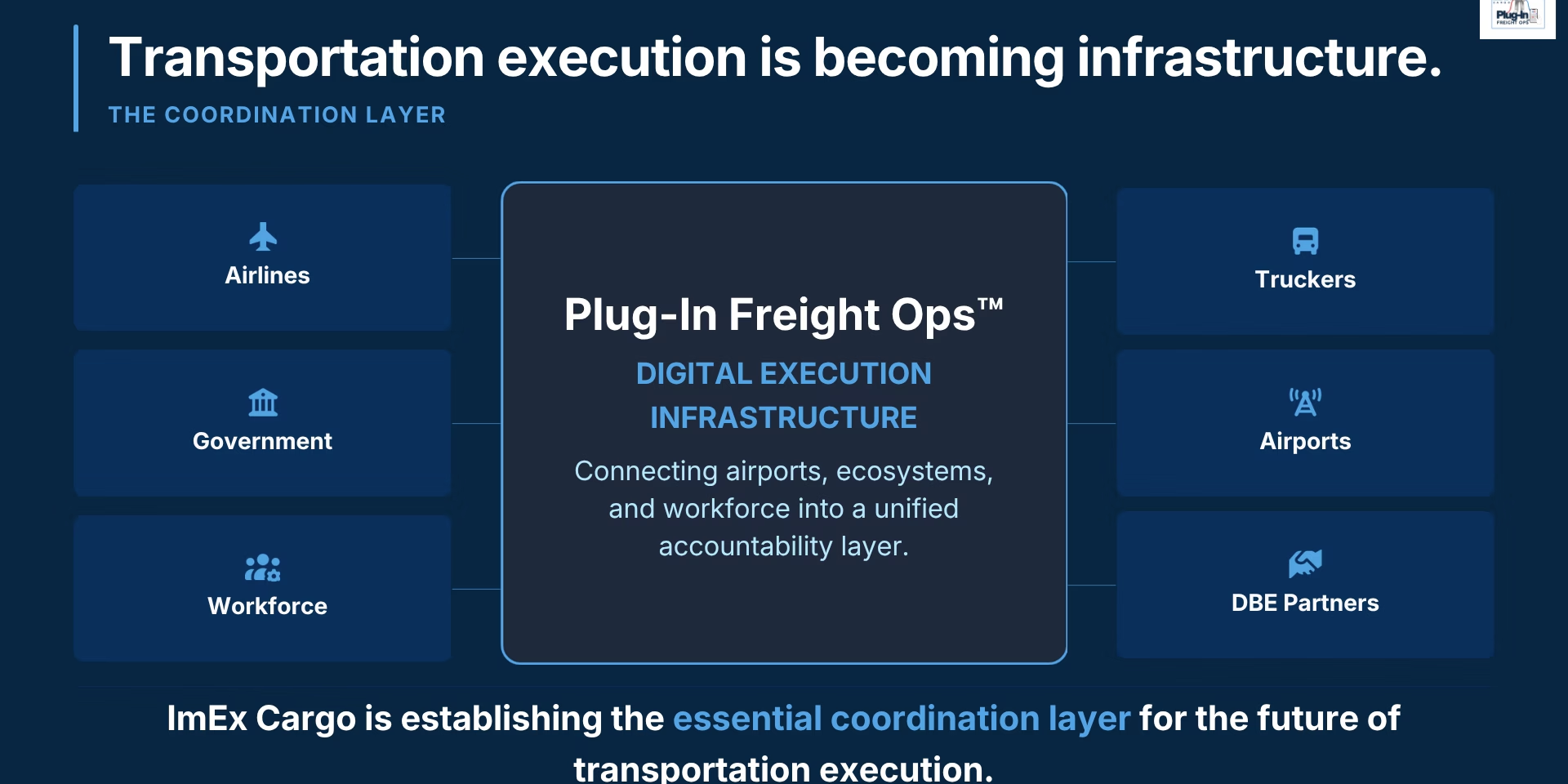
This is not another dashboard. It is not a marketplace for buying and selling capacity, nor is it a point solution designed to fix a single niche problem. Instead, it is an orchestration layer that sits above existing systems: TMS, WMS, and ERPs: to standardize and manage execution across the full shipment lifecycle.

At ImEx Cargo, we call this Plug-In Freight Ops™. Rather than replacing the tools your teams already use, this infrastructure layer acts as the digital "connective tissue" for the ecosystem. It provides the structured handoffs and partner accountability necessary to move from reactive tracking to proactive management.
The Power of Logistics Orchestration
When you implement a logistics orchestration layer, the nature of the handoff changes:
- Standardized Workflows: From quote to booking to delivery, every step follows a unified protocol that all stakeholders: airlines, truckers, and government agencies: can follow.
- Ecosystem Activation: It allows organizations to activate diverse partner networks, including certified DBE suppliers and workforce pipelines, within a single system of record.
- Audit-Ready Oversight: Because every handoff is recorded and owned, you gain a level of performance tracking and accountability that siloed systems cannot provide.
Beyond the Speed Myth
The evolution of AI, automation, and data intelligence promises to flood our industry with even more information. But more data is only useful if it leads to better action.
As we look toward the future of government logistics and infrastructure support, the winners will not necessarily be the ones with the most data. They will be the organizations that best connect that data to real-world execution.
The industry is moving toward a model where intelligence must turn into coordinated action instantly. If a system identifies a delay but cannot trigger a response across three different stakeholders, that system has failed.

Closing the Gap
Closing the execution gap requires a shift in mindset. We must stop viewing logistics as a series of independent events and start viewing it as a single, continuous execution workflow.
We typically address these challenges through a focused pilot program, mapping our Digital Execution Infrastructure to your current operation to identify where your handoffs are breaking down.
The question for leaders in the air cargo and infrastructure space is no longer "How fast can we move data?" but rather:
How do we ensure that our intelligence actually turns into coordinated action across every stakeholder in our chain?
Ready to bridge the execution gap in your operations? Contact the ImEx Cargo team to schedule a capability walkthrough and see how Plug-In Freight Ops™ can provide the execution certainty your stakeholders demand.