Michelle has spent more than 30 years inside logistics operations. That matters because Plug-In Freight Ops™ did not come from theory, venture-backed assumptions, or a software-first agenda. It came from years of watching execution break down across real shipments, real stakeholders, and real deadlines.
That origin reflects a broader industry pattern. For years, logistics organizations have normalized manual coordination as operational reality—an environment where inboxes, spreadsheets, calls, and follow-ups quietly become the system holding execution together.
What gets normalized in logistics
For decades, operational chaos has been treated like part of the job.
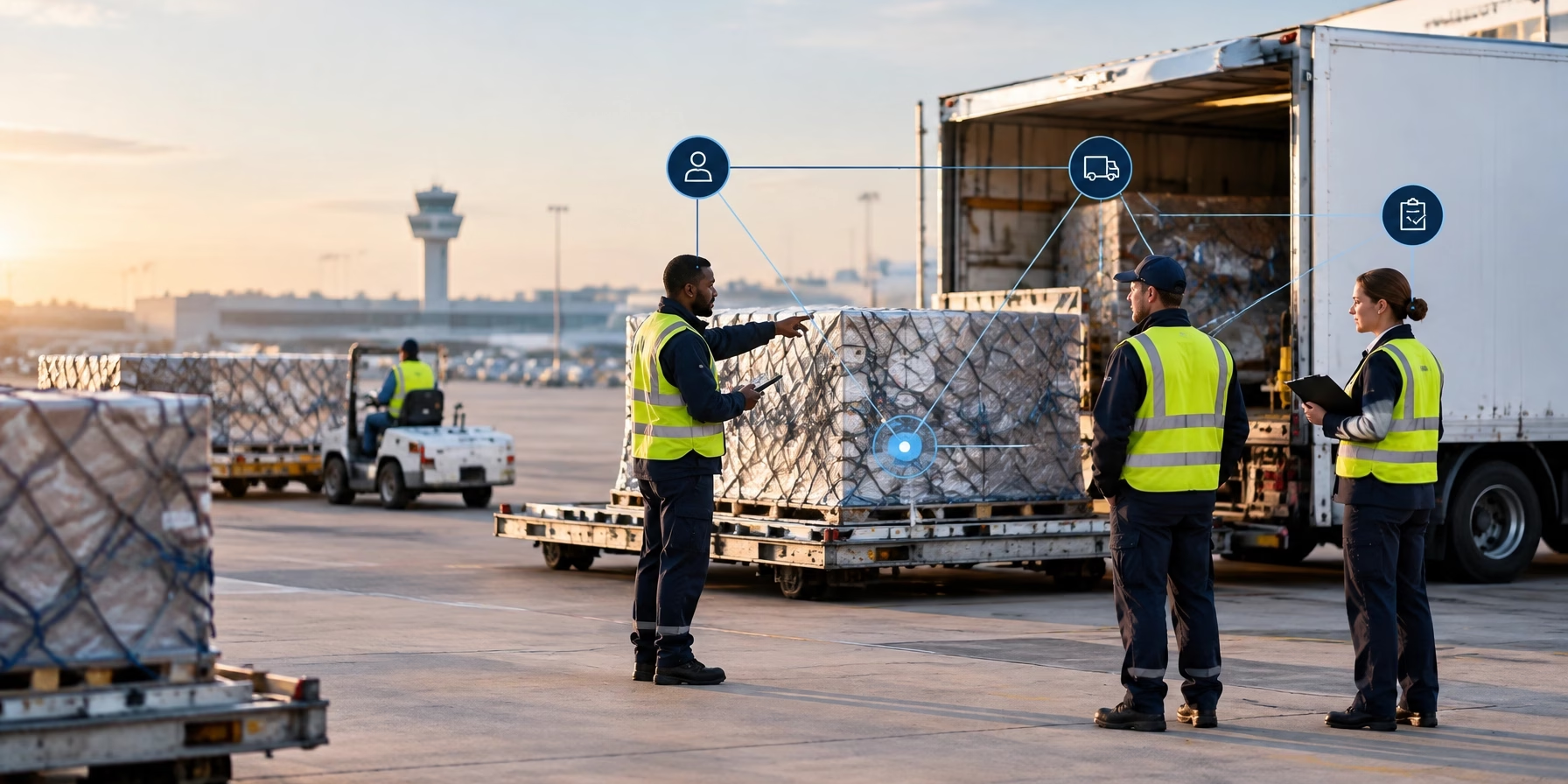
Missed handoffs. Unclear ownership. Status updates trapped in inboxes. Bookings separated from tracking. Multiple partners working the same shipment with no shared execution view. In many environments, this is considered normal simply because it happens so often.

But normalized chaos is still chaos. It slows decisions, increases risk, and weakens accountability across the shipment lifecycle.
In that sense, the problem is larger than any one shipment or operator. The industry has spent years accepting manual coordination as a permanent condition—an echo of the familiar pattern where execution depends on hundreds of messages because no shared coordination layer exists.
Michelle saw this pattern repeatedly across freight environments. The issue was rarely effort. The issue was coordination.
Why moving freight was never the full problem
The market often talks about transportation capacity, rates, or systems. Those matter. But in complex logistics environments, the real breakdown usually happens between stakeholders.
A shipment can have the right carrier, the right route, and the right systems in place and still fail operationally if:
- execution steps are not standardized
- handoffs are not structured
- partner responsibilities are not visible
- no one can see where the process stalled

That insight shaped a different direction. The opportunity was not just to move freight. It was to create infrastructure for execution coordination.
From operator experience to execution infrastructure
Plug-In Freight Ops™ was built from that operational reality.
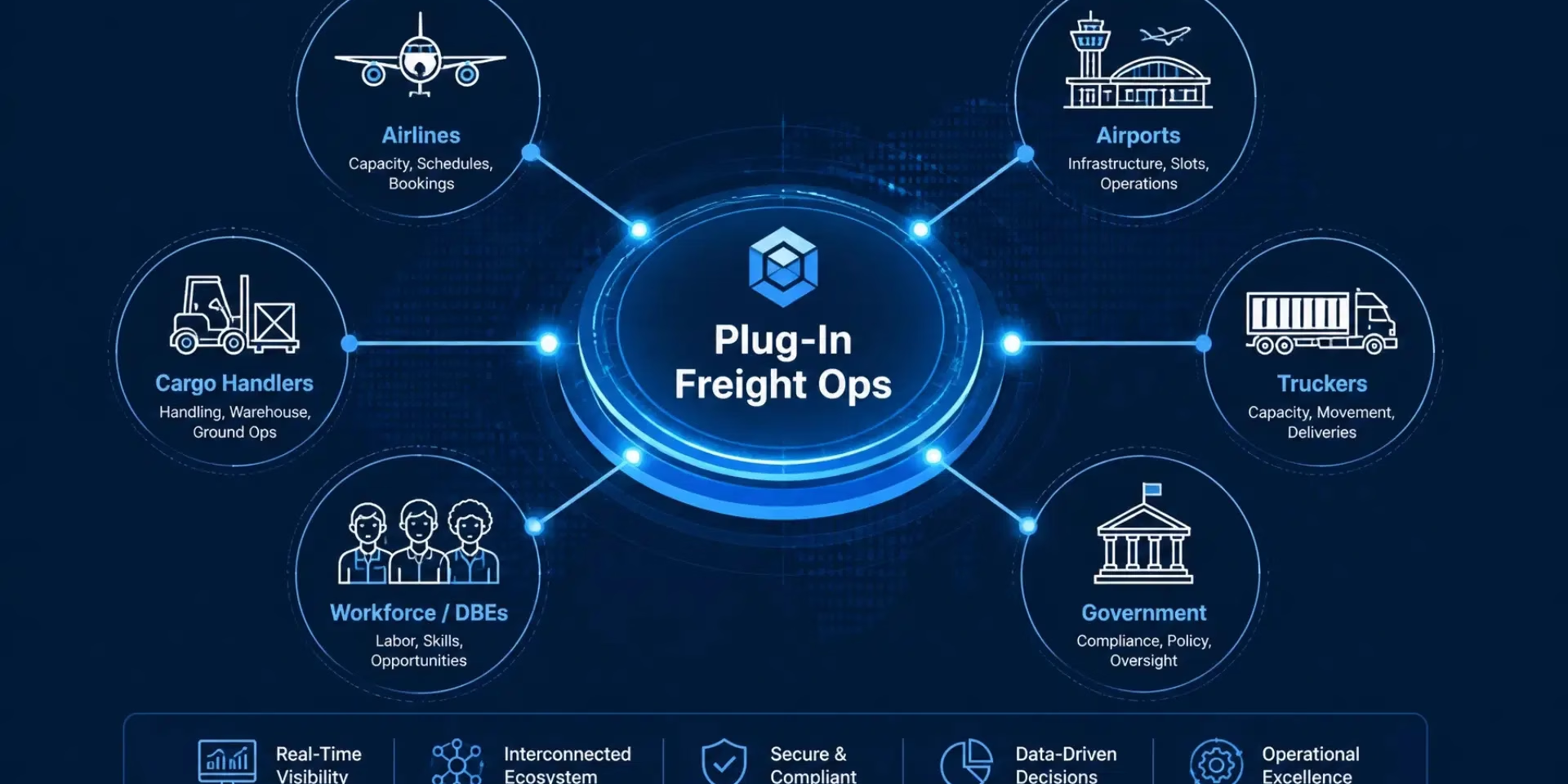
It sits above fragmented systems and disconnected participants to coordinate the work itself. Instead of forcing organizations to replace what they already use, it creates a standardized execution layer across the shipment lifecycle.
That includes:
- quote to booking to tracking workflows
- structured handoffs across internal and external parties
- real-time visibility into shipment status and execution progress
- accountable ownership across partners, providers, and stakeholders

This is the shift behind the category. Not from analog to digital. From fragmented freight movement to coordinated freight execution.
What Plug-In Freight Ops™ is designed to solve
Plug-In Freight Ops™ is specifically focused on execution coordination, visibility, and accountability.
That means the platform is designed to address the operational gaps that create delay, rework, and performance risk:
- disconnected communication across airlines, GSAs, forwarders, truckers, and agencies
- inconsistent workflows from quote through delivery
- loss of visibility during partner handoffs
- unclear responsibility when execution goes off track
- limited audit readiness across complex logistics programs

By standardizing how work moves across stakeholders, the platform reduces fragmentation without adding another silo.
Why this story matters now
The logistics world does not need more software that stops at transactions. It needs coordination infrastructure that manages execution across multi-party environments.
That is where Plug-In Freight Ops™ fits. It gives organizations a way to see the full workflow, track performance across stakeholders, and create accountability where operations usually go dark.
Michelle’s 30+ years of experience informed that approach from the ground up. The result is not a tool built around features. It is an execution framework shaped around what actually breaks in the field.
The future is coordinated execution
This story is not about becoming another logistics company. It is about building the infrastructure layer that complex operations have been missing.
When execution is standardized, visibility improves. When visibility improves, accountability becomes possible. And when accountability becomes possible, organizations gain more control over time, risk, and performance.
Plug-In Freight Ops™ was built for that outcome.
The larger point is increasingly clear across the industry: moving freight is only part of the challenge. The missing layer is coordination infrastructure—the system that turns fragmented activity into managed execution across stakeholders.
For organizations evaluating what that looks like in practice, this is often explored through a focused 90 day pilot or a capability walkthrough. The category thesis remains the same: where execution has long depended on manual coordination, infrastructure for coordinated execution becomes essential.
For a reference library of definitions, comparisons and workflows across coordinated freight execution, see the PIFO Knowledge Hub.