The next generation of air cargo talent is already in the classroom. The problem is giving students a real path into the work.
Air cargo doesn’t have a student interest problem. It has an experience gap.
Many students are learning logistics concepts in class, but they are not getting enough real-world exposure to how cargo operations actually run. At the same time, airlines, GSAs, and ground handlers need people who can step into fast-moving environments and contribute quickly.
The disconnect is simple: students need clearer pathways from school to work, and universities need an easier way to connect learning with real operational experience.
Why Students Still Aren’t Job-Ready
Most students are doing what they’re supposed to do: showing up, learning the material, and trying to build a future in logistics.
The problem is that classroom learning alone rarely prepares them for the pace, pressure, and coordination required in real cargo operations. Students may understand the concepts, but still graduate without seeing how bookings, handoffs, tracking, ramp activity, and partner communication work in practice.
That creates avoidable friction for everyone:
- Students leave school unsure how to apply what they learned on the job.
- Universities want stronger career outcomes but often lack simple ways to connect students to live industry environments.
- Employers need entry-level talent that can ramp up faster in real operations.
The gap is not motivation. It’s access to relevant experience before day one on the job.

A Better Solution: Real-World Experience Before Graduation
Students become more confident and more employable when they get exposure to real logistics environments before they graduate.
That means more than a lecture about supply chains. It means seeing how freight moves, understanding who is involved, and learning how decisions and delays affect the full operation.
The Workforce Innovation Network (WIN) Landing Page is designed to make that easier.
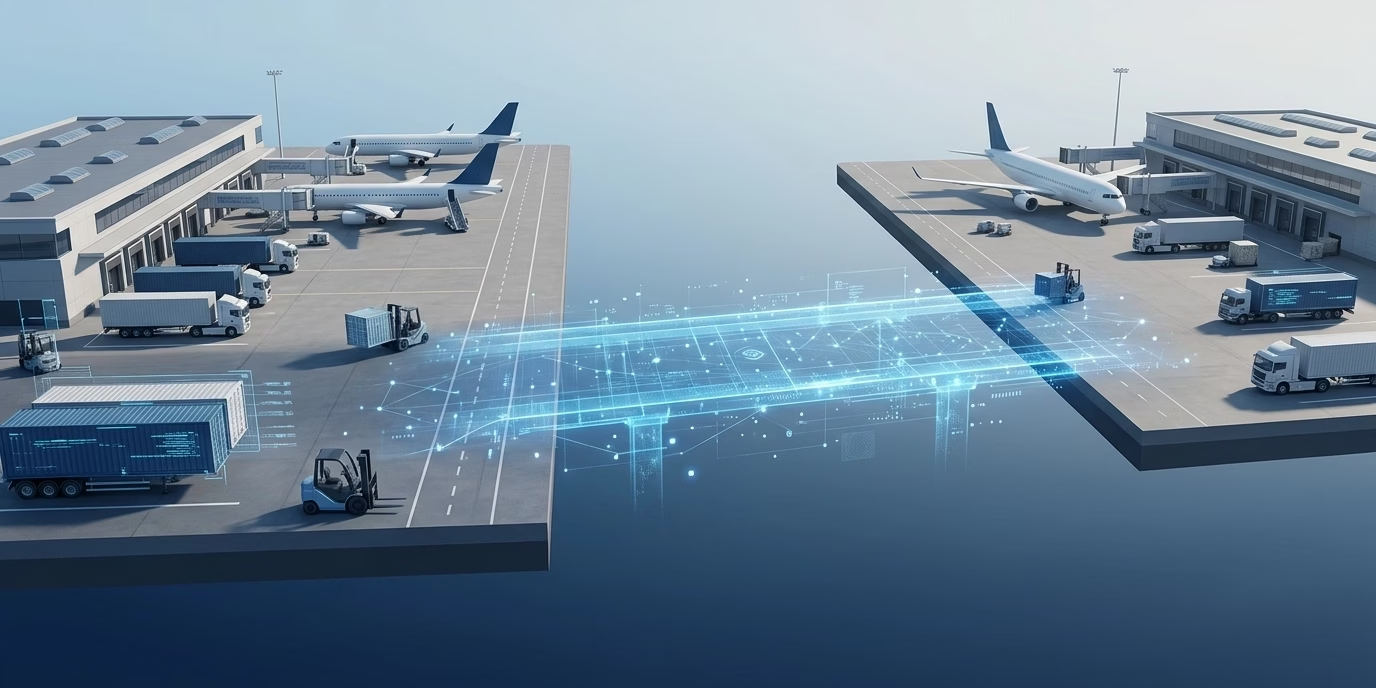
WIN acts as the bridge between universities and industry so students can access meaningful, job-relevant experience in a more structured way. Instead of leaving schools to build these relationships from scratch, WIN helps connect the classroom to the real world of cargo execution through structured Workforce Development Partnerships and a broader Workforce Ecosystem Infrastructure.
With that bridge in place, universities can offer stronger pathways and students can build experience that translates directly into career readiness.
How WIN Helps Universities and Students
WIN is not about adding more complexity for schools. It is about making industry connection easier, more practical, and more useful for the student.
It helps universities create clearer bridges between academic learning and operational exposure by supporting:
- Real-world visibility: Students gain a better understanding of what air cargo and logistics roles actually look like day to day.
- Practical exposure: Learning is reinforced through experiences tied to real workflows, real stakeholders, and real operating environments, including structured Workforce Activation Pilots.
- Stronger career readiness: Students build confidence, context, and familiarity before they enter the workforce, with added support from the Academy.
- Better alignment: Universities can connect programs more closely to what Employer Partners actually need from entry-level talent.

The result is simple: students are better prepared, and universities can deliver stronger outcomes.
That is good for the student, good for the school, and good for the employers looking for talent that can contribute faster.
What Job Readiness Should Actually Look Like
If the goal is to help students succeed, they need more than theory. They need learning that feels connected to the jobs they want.
That includes:
- Seeing the work clearly: Students should understand how air cargo roles function across airlines, GSAs, freight forwarders, and ground operations.
- Learning in real context: Exposure should reflect actual workflows, not just textbook definitions.
- Building confidence early: The more familiar students are with real environments before graduation, the easier the transition into work becomes.
- Understanding how teams connect: Students should see how one role affects another across the shipment lifecycle.
When universities can offer that kind of experience, students graduate with more than knowledge. They graduate with direction.

The Opportunity for Universities
Universities have a major opportunity to improve student outcomes by bringing industry closer to the learning experience.
When students can connect what they study to what actually happens in the field, they are more engaged, more confident, and more prepared to pursue logistics careers with purpose.
WIN helps make that connection easier by acting as the bridge between education and industry, so schools do not have to build every pathway on their own and students do not have to figure it all out by themselves. That includes connecting institutions into a more coordinated workforce framework through Workforce Development Partnerships and the supporting Workforce Ecosystem Infrastructure.
Ready to Create Better Student Pathways?
If your university is looking for a more practical way to connect students to real logistics careers, WIN Landing Page provides a clear bridge between classroom learning and real-world experience.
We typically address this through a focused pilot or a capability walkthrough. Happy to map how Workforce Activation Pilots, Employer Partners, and the Academy can support stronger student outcomes in your environment.