The industry has a "Post and Pray" problem. You’ve seen it: a cargo handler position opens up, it gets posted to a generic job board, and everyone prays that a qualified, reliable human magically appears in the terminal.
When they don’t, we call it a "labor shortage." When they do, but leave three weeks later for a dollar more down the street, we call it a "retention crisis."
But let’s be honest: it’s actually a coordination failure.
If hiring alone were the solution, air cargo would not still be dealing with the same talent problems year after year. The issue is not just finding people. It is finding the right people faster, getting them into the operation with less friction, and keeping them engaged long enough to make a real impact.
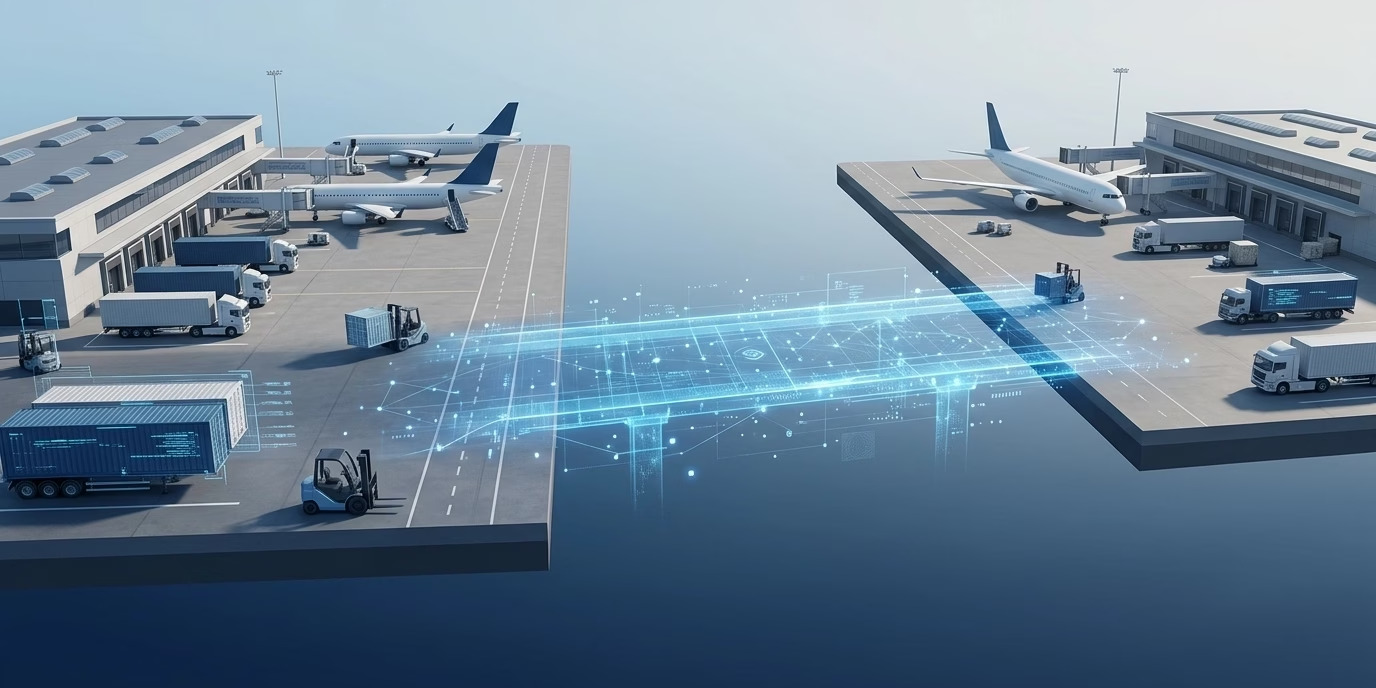
At ImEx Cargo, we’ve spent 30 years watching where handoffs break down. The problem usually is not effort. It is that airlines, handlers, schools, workforce partners, and public agencies are all working separately. That creates delays, missed opportunities, and constant rehiring.
The High Cost of Fragmentation
In air cargo, we obsess over the "Digital Twin" of a pallet, but we treat the human element like an afterthought. We manage shipments through complex ERPs and then manage the people moving those shipments through sticky notes and frantic WhatsApp threads.
This fragmentation is expensive. When an airline, a GSA, and a ground handler aren't synchronized, the workforce becomes reactive. They are constantly putting out fires instead of executing a structured workflow.
Execution breaks down when:
- Airlines have capacity but no visibility into the handler’s staffing levels.
- GSAs book freight that the warehouse isn't prepared to receive.
- Government agencies mandate DBE (Disadvantaged Business Enterprise) participation, but prime contractors have no structured way to find or verify those partners.
The industry has normalized a 200-email chain for a single shipment. We’ve normalized "invisible handoffs." And we’ve normalized a workforce model that treats people as a variable cost rather than critical infrastructure.

Workforce as Infrastructure (Not an HR Expense)
A strong cargo operation cannot run on last-minute hiring. It needs a repeatable way to attract, qualify, and keep talent across the operation.
That means treating workforce planning as part of day-to-day execution, not as a separate HR issue. If roles stay open too long, onboarding is inconsistent, or turnover stays high, service levels suffer.
The Problem with Disconnected Hiring
Most companies are still trying to solve this one opening at a time. Post a role. Wait. Interview. Refill it again a few weeks later.
But the real problem usually sits between organizations:
- Schools do not know what roles are needed most.
- Workforce partners are not aligned to live demand.
- Operations teams cannot see where talent gaps are forming.
- Public programs and supplier networks are hard to activate quickly.
That is what creates the usual headaches: slow hiring, weak fit, high turnover, and too much manual follow-up.
Introducing the Plug-In Freight Ops™ Workforce Innovation Network
The Plug-In Freight Ops™ Workforce Innovation Network gives airlines and cargo networks a more practical way to solve talent gaps.
It connects the groups that already influence workforce outcomes:
- Airlines and GSAs that need dependable staffing and stronger execution
- Schools and training partners that can supply better-aligned candidates
- Workforce boards and public partners that support funding and access
- DBE and supplier networks that can be activated for broader project needs
The result is simpler and more useful:
- Better visibility into where talent is needed
- Faster connection to the right pipeline partners, including Workforce Development Partnerships
- Less guesswork in recruiting and onboarding through more structured Employer Partners alignment
- More consistency across handoffs
- A clearer path to retention because expectations are better aligned from the start

Why Coordination Trumps Hiring Every Time
Think about the last time a role stayed open too long or a new hire did not last. In many cases, the issue was not a lack of applicants. It was poor alignment, slow follow-up, unclear expectations, or weak connection between operations and workforce partners.
That is why execution accountability matters. When the right people are connected to the right roles through a more coordinated process, airlines and cargo networks gain:
- Faster hiring cycles: Less delay between need, outreach, and placement
- Better-fit candidates: Talent pipelines align more closely to real operational demand
- Stronger retention: People stay longer when roles, expectations, and support are clearer
- Less operational disruption: Fewer staffing surprises and fewer last-minute scrambles
- More control: Better visibility into who is responsible for each step and where bottlenecks are forming
Activating the Ecosystem
The goal is not to replace your team or add more complexity. It is to make it easier to find, align, and retain the people your operation depends on.
For airlines and cargo networks, that means less time chasing candidates, less friction across partners, and a more reliable path from workforce need to operational readiness. For public and project stakeholders, it creates a clearer way to connect participation goals to real execution through Workforce Activation Pilots and a stronger Workforce Ecosystem Infrastructure.

The Path Forward: From Silos to Systems
Air cargo does not need more hiring noise. It needs a better way to connect workforce demand with the right talent sources and keep that talent in place, whether through aligned Employer Partners, coordinated Workforce Development Partnerships, or role-specific training pathways delivered through the Academy.
That is the real opportunity: fewer hiring headaches, stronger retention, and more reliable execution across the network.
This is not a theory. It affects service performance, growth, and day-to-day stability.
Ready to see how a more coordinated workforce approach can reduce hiring friction and improve retention?
We typically address this through a focused pilot or capability walkthrough. Happy to map this to your current operation.
Let’s map this to your current operation.