In the current logistics landscape, information is abundant, but execution remains fragmented. While we have tools to track shipments and systems to manage internal fleets, the actual handoff of a single air cargo shipment often involves seven or more independent organizations: each operating on their own siloed software.
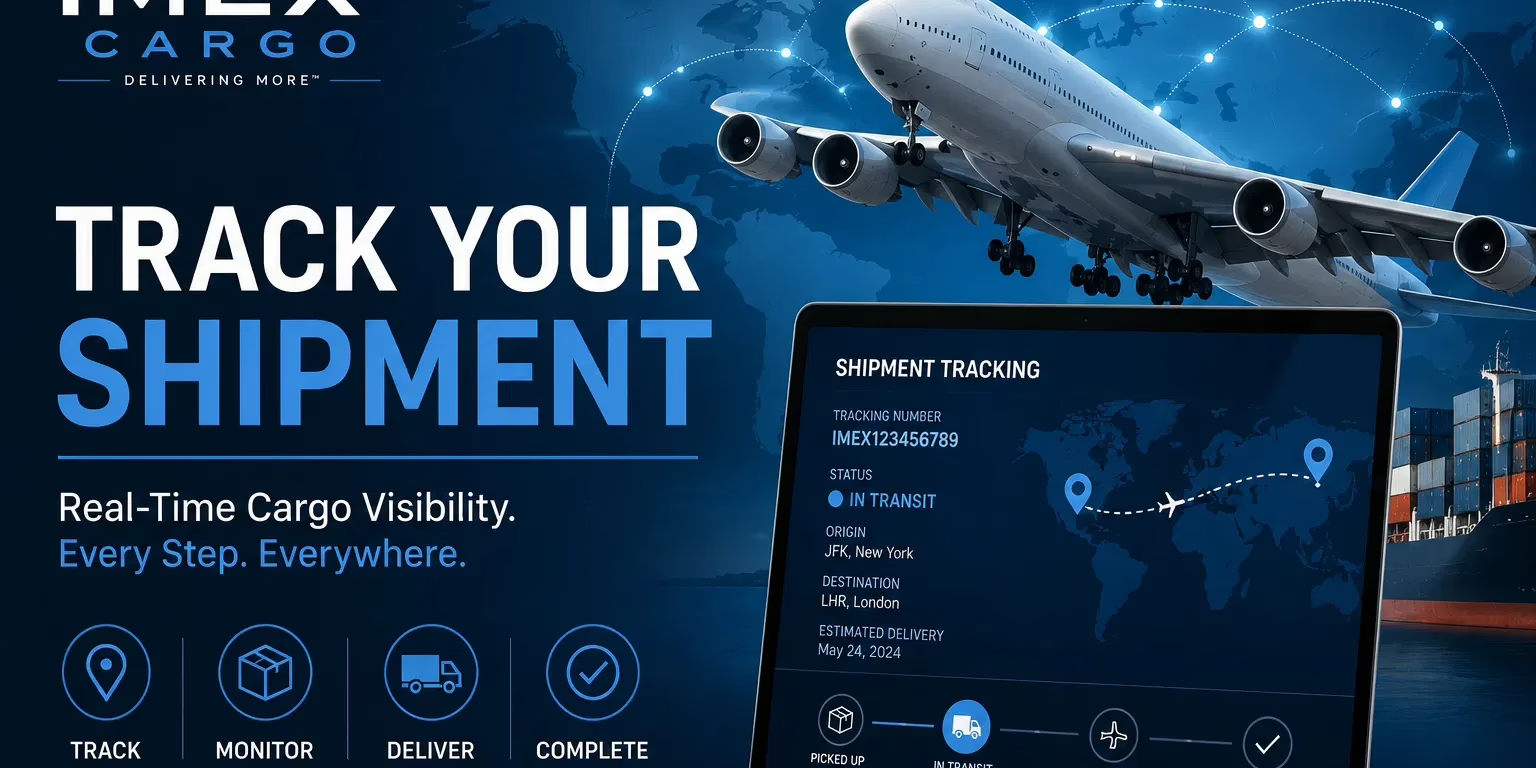
This gap between visibility (seeing where a shipment is) and execution (ensuring it actually moves through the next milestone) has created the need for a new technology category: the Freight Coordination Platform.
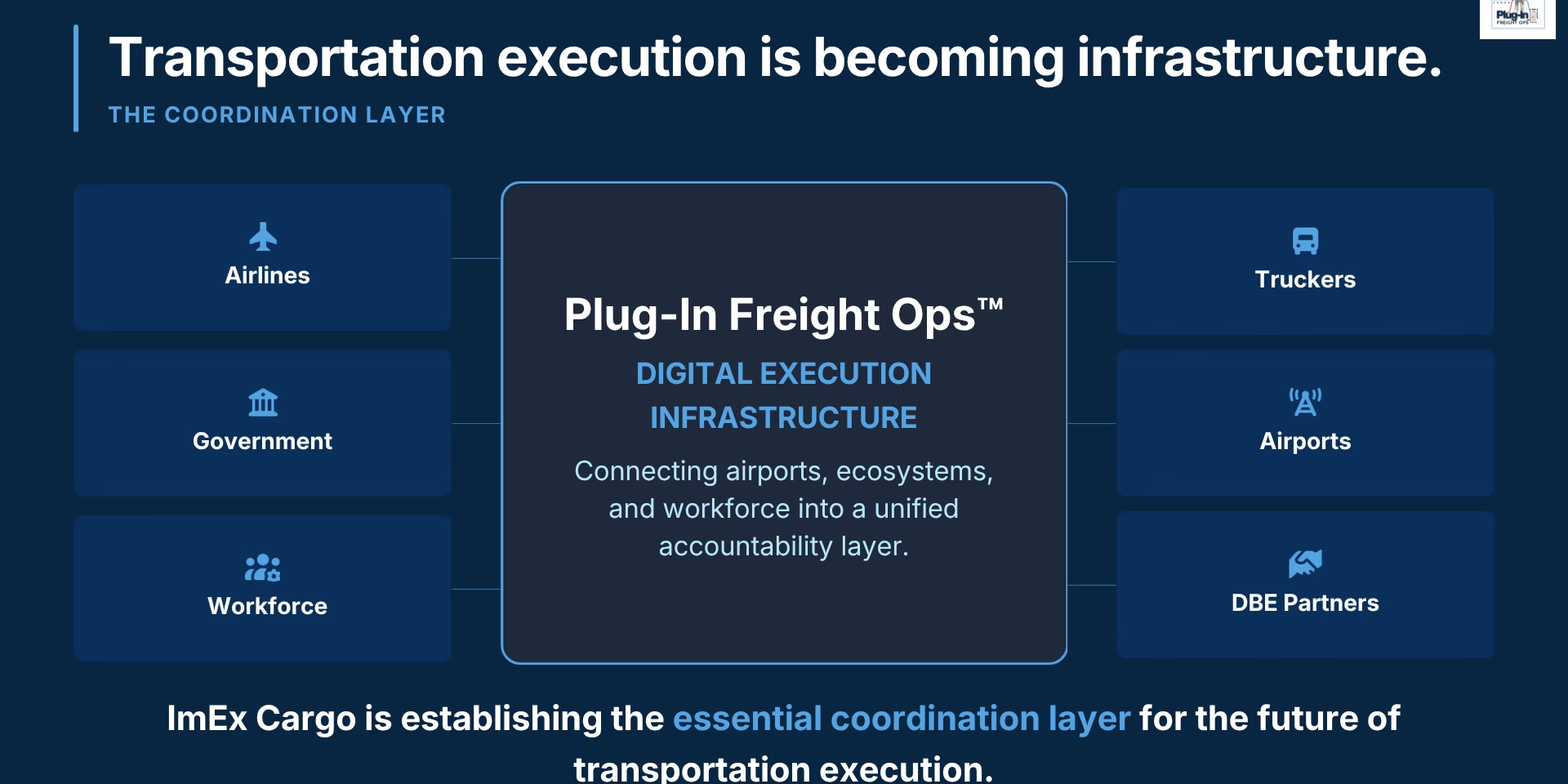
Unlike traditional software that manages a single company’s internal operations, a Freight Coordination Platform acts as a neutral digital orchestrator that connects the entire ecosystem into a single, accountable workflow.
1. What is a Freight Coordination Platform?
A Freight Coordination Platform is a neutral, digital execution infrastructure layer designed to coordinate work, data, and decisions across all stakeholders in a freight movement.
It does not replace existing systems. Instead, it sits above them: connecting airlines, GSAs, freight forwarders, trucking providers, warehouses, and government agencies into a unified environment. Its primary purpose is to standardize execution across the full shipment lifecycle: from quote and booking to tracking and final delivery.
By providing a structured coordination layer, the platform ensures that every stakeholder knows exactly what they are responsible for, when their "turn" starts, and when the handoff to the next partner is complete.
2. The Coordination Problem: Why Fragmented Freight Fails
Logistics execution breaks down because freight moves through independent organizations that do not share the same systems.
Consider a typical international air cargo shipment:
- The Forwarder books the cargo in their TMS.
- The Trucker receives a dispatch via email or a separate portal.
- The Airline/GSA manages capacity in an airline-specific system.
- The Ground Handler tracks physical movement on a warehouse management system (WMS).
- Customs/Government Agencies require specific documentation for compliance.
When a delay occurs: a flight cancellation or a trucking bottleneck: the notification often travels through a "game of telephone" via manual emails and phone calls. Information is lost, accountability is blurred, and the shipment sits idle.
The problem isn't a lack of data; it's a lack of coordinated execution. Digital freight infrastructure solves this by providing the "connective tissue" that ensures these disparate systems and teams act as one.

3. How It Works: The Neutral Infrastructure Layer
A Freight Coordination Platform operates on three core principles:
Neutral Orchestration
Most logistics software is built for a specific user: the carrier, the shipper, or the forwarder. A coordination platform is neutral; it is the "common ground" where all parties meet. This neutrality is essential for building trust among stakeholders who may otherwise be competitors but must cooperate to move a specific shipment.
Structured Handoffs & Accountability
The platform defines "execution nodes." When a trucker arrives at a warehouse, that event is captured and triggers the next step for the ground handler. By mapping the entire workflow (Quote → Book → Track → Deliver), the platform creates a digital audit trail of ownership. If a shipment stalls, the system identifies exactly where the handoff failed.
Ecosystem Activation
Beyond just moving boxes, these platforms activate broader partner ecosystems. This includes integrating certified DBE (Disadvantaged Business Enterprise) networks and workforce pipelines. By including these stakeholders in the primary execution layer, organizations can meet compliance and economic impact goals without adding administrative overhead.
4. Key Differentiators: What It Is (And What It Isn’t)
To understand this category, it is helpful to contrast it with existing logistics technology:
| Feature | TMS (Transportation Management System) | Visibility Platforms (RTTVP) | Freight Coordination Platform |
|---|---|---|---|
| Primary Focus | Internal transactions & planning. | Real-time tracking & ETAs. | Multi-party execution & handoffs. |
| Ownership | Usually owned/used by one party. | Data aggregation for the shipper. | Neutral layer for all stakeholders. |
| Workflow | Focuses on "My work." | Focuses on "Where is it?" | Focuses on "Who has it now?" |
| Interoperability | Siloed. | Reads data from silos. | Orchestrates work across silos. |
Execution-Focused, Not Just Visibility
A visibility platform might tell you that a shipment is delayed. A Freight Coordination Platform tells you why it’s delayed, who is responsible for fixing it, and provides the digital environment to re-coordinate the next leg of the journey immediately. It moves the needle from "I see the problem" to "I have resolved the execution gap."

5. Who Benefits from a Freight Coordination Platform?
Because it is an infrastructure layer, the benefits scale across the entire logistics ecosystem:
- Airlines & GSAs: Gain better visibility into ground operations and partner performance, reducing terminal dwell times and improving capacity utilization.
- Freight Forwarders: Reduce manual "check calls" and emails, allowing teams to manage more volume with higher precision.
- Government & Infrastructure Primes: Gain audit-ready oversight of complex projects, ensuring that logistics execution matches the requirements of large-scale public programs.
- Trucking Providers: Receive clear, digital handoffs and real-time updates, reducing wait times at airports and warehouses.
- Workforce & DBE Partners: Gain direct access to active project workflows, ensuring they are utilized effectively and their impact is tracked in real-time.
6. The Relationship to Other Technologies
A Freight Coordination Platform is not a "rip and replace" solution. It is designed for zero-migration deployment.
It complements your existing TMS by providing the cross-enterprise coordination that a TMS lacks. It enriches your Visibility Platforms by turning their tracking data into actionable execution steps. And it provides the structure for Marketplaces to ensure that once a "match" is made between a buyer and seller, the actual shipment is executed reliably.
We call this approach Plug-In Freight Ops™. It allows organizations to modernize their logistics execution without disrupting the systems they already rely on.

Moving Toward Coordinated Execution
The era of managing logistics through disconnected spreadsheets and "best-effort" communication is ending. As supply chains become more complex and stakeholders more specialized, the need for a central, digital orchestrator is no longer optional: it is a requirement for operational survival.
Defining this new category of Freight Coordination Platforms is the first step toward a more transparent, accountable, and efficient global logistics infrastructure.
Are you ready to move from visibility to execution?
We typically begin these conversations by mapping your current stakeholder handoffs to identify where execution breaks down.
Contact ImEx Cargo to discuss a pilot of Plug-In Freight Ops™ in your environment.