
For decades, the air cargo industry has been held together by a fragile web of PDFs, emails, and phone calls. We’ve all been there: a shipment is "somewhere" between the GSA and the ground handler, the data in the system doesn’t match the physical reality on the tarmac, and everyone is scrambling to find the right version of an Air Waybill.
But the industry is about to hit a major reset button. The IATA ONE Record standard is moving from a "nice-to-have" digital vision to a mandatory industry reality, with a significant push toward full adoption by 2026.
At ImEx Cargo, we’ve seen how fragmentation kills execution. That’s why we’re excited about IATA ONE Record: not just because it’s a new digital standard from IATA, but because of what it enables when paired with a true digital execution layer like Plug-In Freight Ops™.
In this post, we’re breaking down why IATA ONE Record is the language of the future and how you can use it to actually coordinate operations, rather than just moving data while staying aligned with IATA’s digital direction.
IATA and ONE Record are trademarks of the International Air Transport Association.
1. Decoding IATA ONE Record: The "Single Source of Truth"
If you’ve ever played a game of "telephone," you know how a message changes as it passes from person to person. That is exactly how air cargo data has functioned for fifty years. An exporter sends data to a forwarder, who re-keys it for the airline, who then sends a subset of that data to the ground handler. By the time the cargo is ready to fly, the original data is often buried under layers of errors and manual updates.
IATA ONE Record changes the game by creating a single, shared digital record for every shipment.
Instead of sending messages back and forth (EDI), IATA ONE Record uses a data-sharing model where everyone "plugs into" the same record.
- The Shared Language: It uses JSON-LD (a modern data format) to ensure every system speaks the same language.
- The Single Source: Data stays with the owner, but authorized partners can access it in real-time.
- The Security: It features a robust security framework that ensures only the right people see the right data at the right time.
Think of it like moving from a paper notebook that you mail to your colleagues, to a live Google Doc where everyone collaborates in real-time.

2. Why Data Isn't Enough: The Execution Gap
Here is the hard truth: Having better data doesn't automatically mean your cargo moves better.
You can have the most accurate, real-time data feed in the world via IATA ONE Record, but if your ground handler isn’t ready for the truck, or if your GSA hasn’t confirmed the warehouse handoff, that data is just noise.
This is where many digitalization projects fail. They focus on the information but ignore the execution.
IATA ONE Record provides the "what" (the shipment details, the dimensions, the weight). But you still need a layer that manages the "how" and the "who." This is the gap where execution breaks down: between the digital record and the physical movement.
At ImEx Cargo, we call this the "Execution Gap." To close it, you need a system that sits above your legacy tools to coordinate the actual work.
3. Plug-In Freight Ops™: The Execution Layer for IATA ONE Record
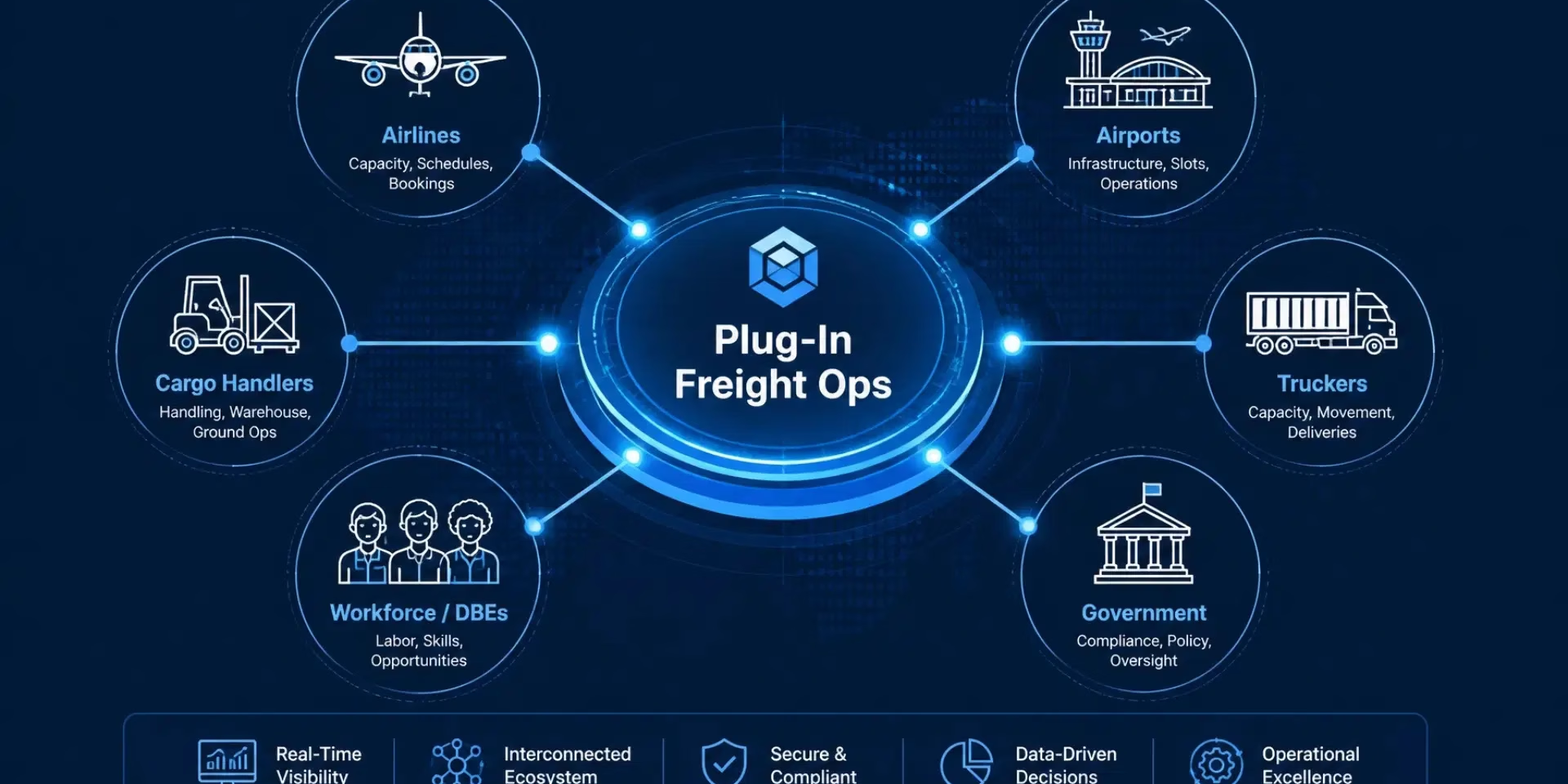
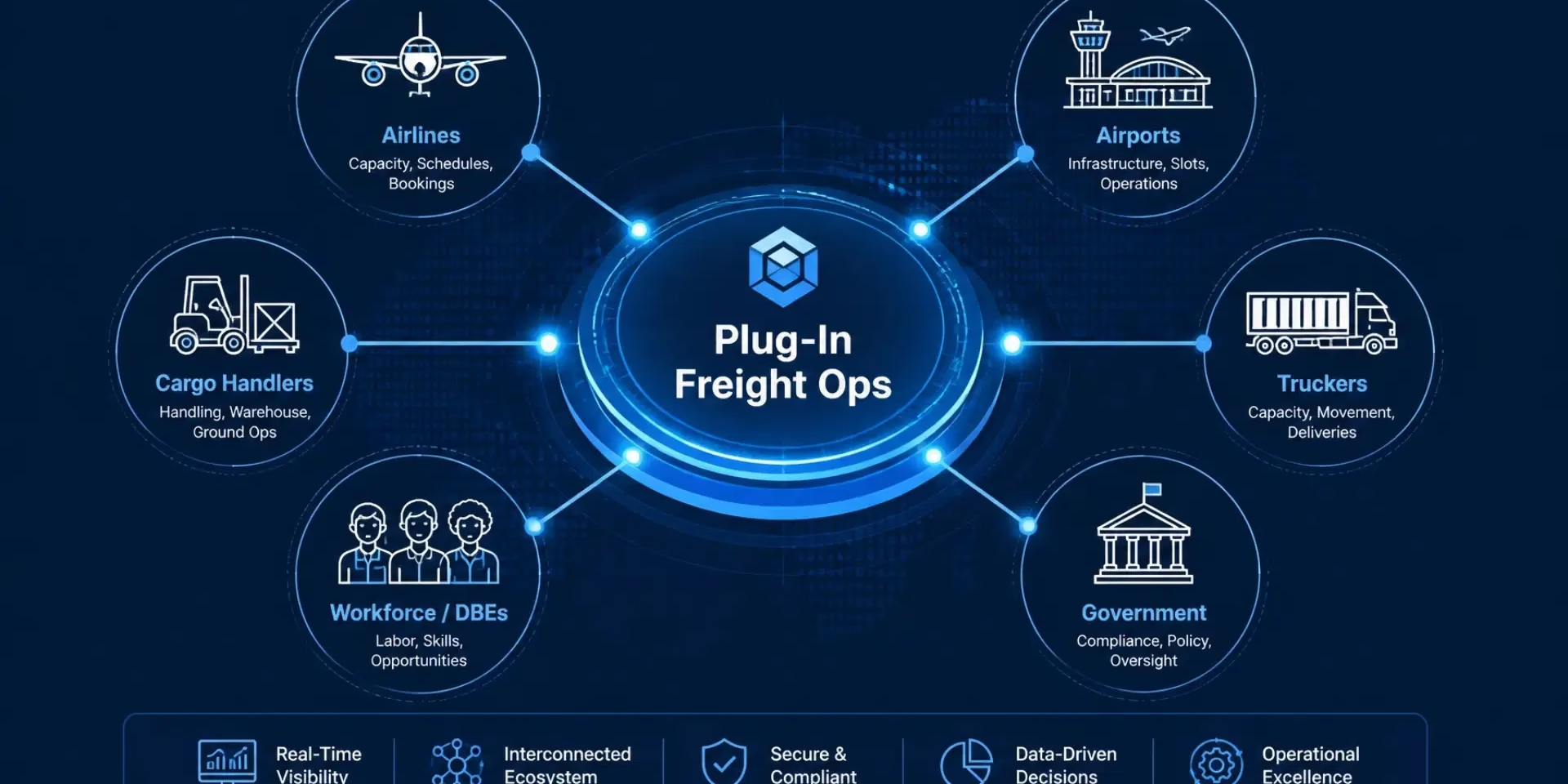
While IATA ONE Record provides the infrastructure for data sharing, Plug-In Freight Ops™ provides the infrastructure for coordination.
Our platform doesn’t replace the systems you already use. Instead, it "plugs in" to them. It takes the standardized data from IATA ONE Record and turns it into a structured, accountable workflow. Plug-In Freight Ops™ is built to support and integrate with the IATA ONE Record standard, so teams can align digital data exchange with real operational coordination.
From Data Points to Actionable Steps
When an airline or GSA uses Plug-In Freight Ops™ alongside IATA ONE Record, the "data" becomes a series of coordinated handoffs:
- Quote & Booking: The standardized record is created.
- Tracking: Real-time visibility is established across all parties.
- Accountability: If a truck is late or a handler hasn't scanned the pallet, the system flags the exception immediately.

By acting as the execution layer, Plug-In Freight Ops™ ensures that the efficiency gains promised by IATA ONE Record actually translate into faster transit times, tighter partner accountability, and lower operational risks.
4. Moving Beyond Legacy Systems (Interoperability over Disruption)
One of the biggest fears in our industry is the "rip and replace" nightmare. No airline or forwarder wants to hear that they have to scrap their existing TMS or ERP to get with the times.
The beauty of the IATA ONE Record standard is that it is built for interoperability. It’s designed to connect disparate systems, which is exactly why IATA has become such an important force in the industry’s digital shift.
Digital Freight Infrastructure should be a bridge, not a barrier. Plug-In Freight Ops™ follows this same philosophy. We don't ask you to change how you work; we give you a unified way to coordinate that work with your partners while staying aligned with IATA’s digital standards.
Whether you are working with airlines, trucking providers, or government stakeholders, the goal is a unified execution layer that sits above the fragmentation.

5. Standardizing the Handoff: Eliminating the "Black Hole"
In air cargo, the "Black Hole" is that period where a shipment has left one party but hasn't yet been acknowledged by the next. It’s the handoff between the trucker and the ground handler, or the airline and the GSA.
IATA ONE Record helps by providing a timestamped digital record of these events. But Plug-In Freight Ops™ takes it a step further by enforcing Performance Tracking and Partner Accountability.
When every stakeholder is working within a unified coordination layer:
- Delays are visible instantly. You don’t have to wait for an email to know something went wrong.
- Handoffs are structured. The system knows exactly what documentation or status is required for the next step.
- Risk is reduced. With audit-ready oversight across the full shipment lifecycle, you minimize the chance of lost cargo or compliance failures.

6. The Ecosystem Play: DBEs and Workforce Pipelines
Digitalization isn't just about planes and pallets. It’s about people.
One of the unique advantages of Plug-In Freight Ops™ is its ability to activate broader ecosystems. For many of our customers: especially those managing large-scale infrastructure projects or government-backed logistics: meeting operational goals also means meeting compliance and economic impact objectives.
Our platform integrates certified DBE (Disadvantaged Business Enterprise) networks and workforce pipelines directly into the execution flow. This means you can track diverse spend and talent development with the same precision you track a shipment from Boston to London.
When you have a "Single Source of Truth" (IATA ONE Record) and a "Single Source of Coordination" (Plug-In Freight Ops™), you can finally align your logistics execution with your corporate governance and sustainability goals.
7. Preparing for 2026: Why the Time is Now
The 2026 deadline for IATA ONE Record adoption might seem far away, but for complex logistics operations, it’s right around the corner. Organizations that wait until the last minute will find themselves scrambling to fix their data silos while their competitors are already reaping the rewards of a coordinated supply chain.
At ImEx Cargo, we recommend a "pilot-first" approach. You don't need to transform your entire operation overnight. Instead:
- Identify a fragmented workflow where execution often breaks down.
- Plug in the coordination layer to bridge your current systems.
- Layer in IATA ONE Record data as it becomes available from your partners.
This path allows you to see immediate time savings and risk reduction without the massive upheaval of a traditional IT overhaul.
Conclusion: Let's Map Your Execution
IATA ONE Record is the language the air cargo industry has been waiting for. It’s clean, it’s modern, and it’s finally standardized. But don't let your digitalization strategy stop at the data.
To win in the next era of logistics, you need to turn that data into disciplined, coordinated execution. At ImEx Cargo, we see that as more than a compliance move. It’s a practical way to align with IATA’s digital standards while improving real-world execution across every handoff.
We typically address these challenges through a focused pilot program tailored to your specific environment. Whether you're an airline managing capacity, a prime contractor overseeing infrastructure logistics, or a municipality managing supply chains, we’d love to show you how this looks in practice.
Ready to see how Plug-In Freight Ops™ can bridge the gap for your operation?
Contact our team today to schedule a capability walkthrough.