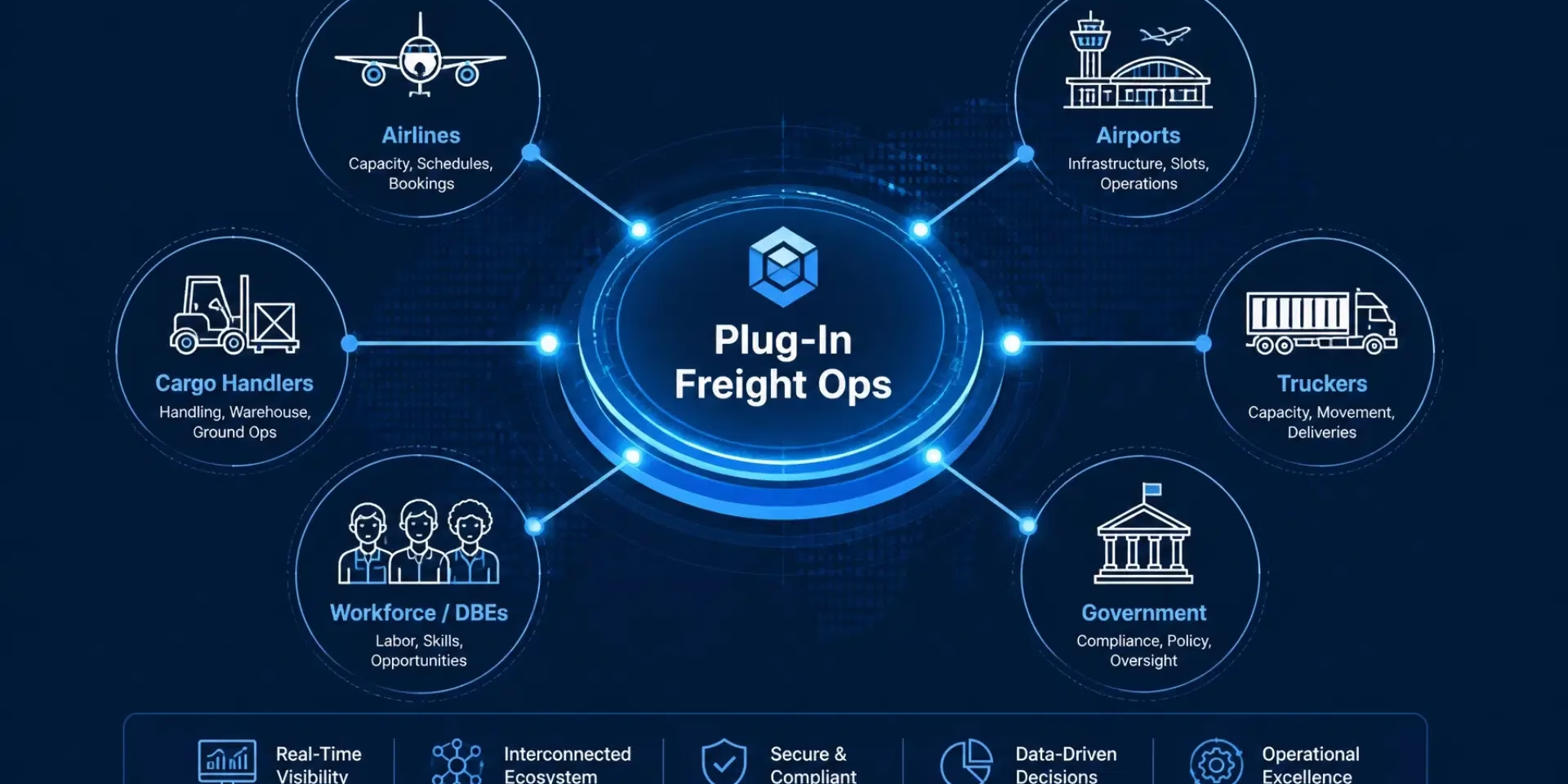
Yesterday, June 2, 2026, wasn't just another Tuesday on the calendar. If you look at the USPTO Official Gazette, you’ll see a name that’s been thirty years in the making: Plug-In Freight Ops™.
For some, a trademark is just a circle-R or a superscript TM on a logo. For us at ImEx Cargo, it’s the formal "I do" to a marriage between three decades of logistics grit and a future built on digital execution.
If you caught Michelle’s latest Founder POV video, you know she didn't just wake up and decide to build a tech platform. This wasn't a "SaaS play" born in a Silicon Valley garage. It started in passenger sales and reservations at Eastern Airlines, then moved into nearly a decade in banking, before transitioning into the cargo industry and eventually launching ImEx Cargo and Plug-In Freight Ops™. That progression—from passenger service to finance to logistics—helped shape the operational perspective behind the platform, where managing thousands of shipments exposed exactly how "the way we’ve always done it" was finally pushed to its breaking point.
30 Years of Grit vs. The 20-Email Nightmare
Let’s talk about the "old way." For thirty years, the logistics industry has run on what we call "tribal knowledge." It’s the seasoned dispatcher who knows exactly which trucking line to call when a blizzard hits the Midwest, or the GSA who knows which airline has five extra kilos of space on a Tuesday flight to London.
But that grit came with a massive paper trail. We’re talking about the "20-30 emails per shipment" problem.
Think about it:
- Email 1: Quote request.
- Email 5: Booking confirmation (maybe).
- Email 12: Where is my freight?
- Email 24: Why is the manifest wrong?
- Email 30: Finally, an invoice.
When Michelle moved from Eastern Airlines into banking, then later into the cargo sector before founding ImEx Cargo, she saw that despite billions spent on "digitalization," the actual execution was still fragmented. People were digitizing pieces: a PDF here, a tracking link there: but nobody was digitizing the workflow. The handoffs between airlines, truckers, and forwarders were still falling through the cracks of a crowded inbox.
Enter Plug-In Freight Ops™: The Execution Layer
We realized that the industry didn't need another standalone software that forced everyone to change how they work. It needed a connective operational layer.

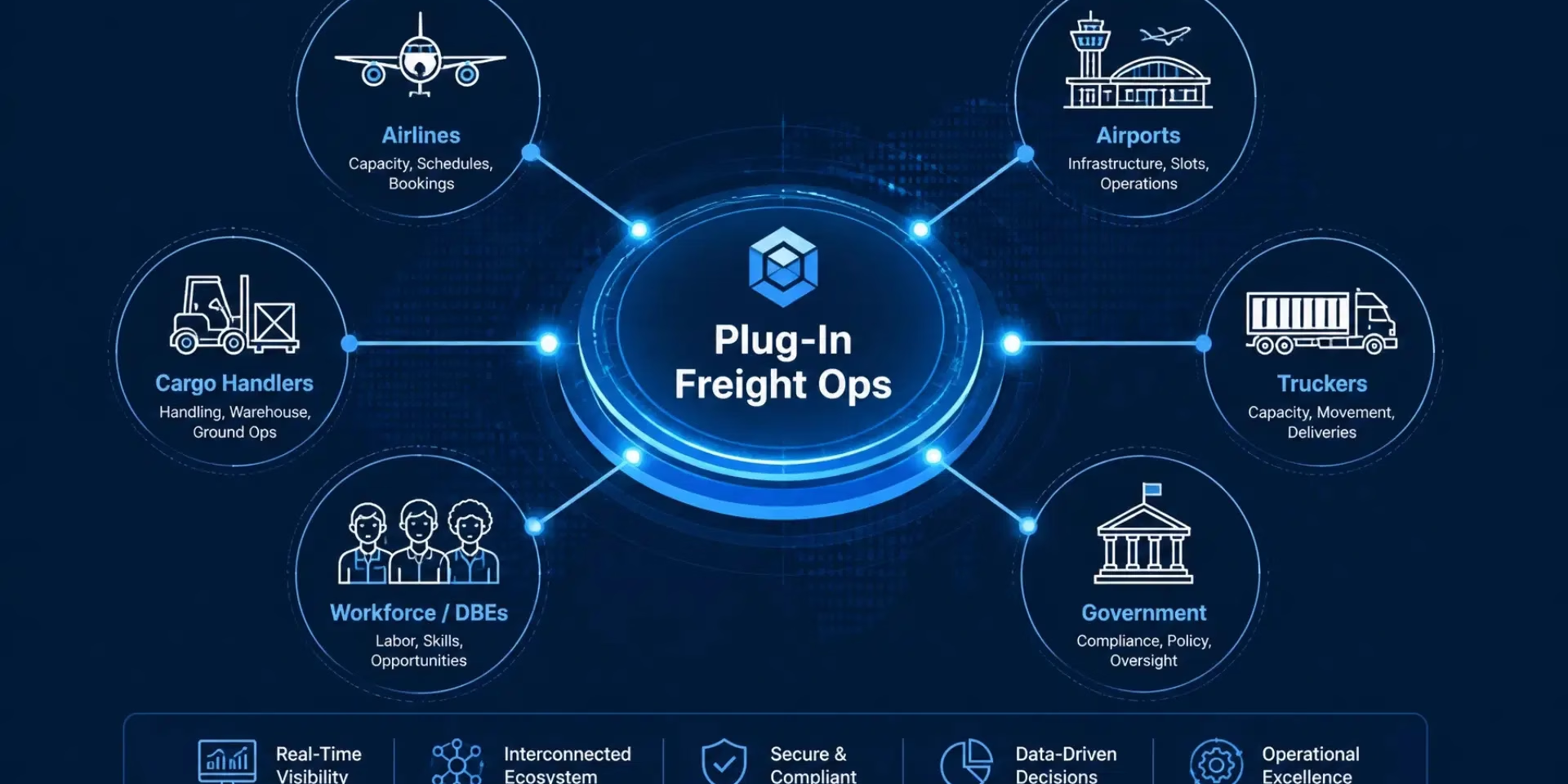
Plug-In Freight Ops™ was designed to sit above the existing systems. It doesn't replace the airline’s portal or the forwarder’s TMS; it plugs them into a single, coordinated execution infrastructure. From the moment you quote to the final delivery, every stakeholder is operating within a unified, audit-ready workflow.
This isn't just about "tracking." It’s about Cargo Execution Management. It’s about ensuring that a DBE contractor on a government project has the same visibility as the prime contractor, and that the airline knows exactly when the truck is hitting the dock.
Why This Trademark Matters (Beyond the Legalities)
The publication of the Plug-In Freight Ops™ trademark today is more than just IP protection. It is market validation of a specific philosophy: Digital Freight Infrastructure.
1. Market Validation
In an industry flooded with "disruptors" who have never touched a pallet jack, this trademark represents a solution built by cargo people for cargo people. It validates that our approach: focusing on the ecosystem execution layer: is the standard for modern logistics.
2. Intellectual Property as Infrastructure
By protecting the Plug-In Freight Ops™ brand, we are securing the methodology behind our coordination workflows. This includes how we handle handoffs, how we activate diverse supplier networks (DBEs), and how we track performance across multi-stakeholder environments.
3. A Commitment to Accountability
When we put our name on it, we’re putting our reputation on the line. The "Ops" in Freight Ops isn't just a buzzword; it’s a commitment to reducing the friction that leads to delays, missed connections, and: you guessed it: those 30 annoying emails.

From Manual Manifests to Digital Blueprints
Michelle often says, "We aren't failing to digitize; we're just failing to connect."
Thirty years ago, success was measured by how much you could carry in your head and how many favors you could call in. Today, success is measured by execution speed and visibility.
The transition from the paper trail to a digital blueprint isn't just a tech upgrade; it’s a culture shift. It’s moving from "I hope it gets there" to "I can see exactly why it hasn't moved yet." It’s about moving from grit to infrastructure-level control.
What’s Next for ImEx Cargo?
We didn't file this trademark to sit on a shelf. We filed it because we are actively scaling the Plug-In Freight Ops™ ecosystem. Whether you are an airline managing capacity, a government agency overseeing a multi-million dollar infrastructure project, or a forwarder tired of the "email abyss," this is the layer you’ve been missing.
The milestone today is a signal to our partners and customers: We’ve built the digital road. Now, it’s time to drive on it.
Ready to see how digital execution can cut through your paper trail?
We typically address these challenges through a focused pilot program designed to map our execution layer directly to your current operations. Let’s start a conversation or walk through a capability walkthrough to see how we can reduce your handoff friction.

About ImEx Cargo
ImEx Cargo is a woman-owned, government-certified logistics provider specializing in complex, high-value, and mission-critical cargo. With over 30 years of experience, we operate at the intersection of traditional grit and modern digital execution. Our proprietary platform, Plug-In Freight Ops™, is the industry's premier digital execution infrastructure for multi-stakeholder logistics.