The air cargo industry has spent billions on digital transformation. Booking platforms, rate engines, cargo marketplaces, and visibility tools all arrive with the promise of total efficiency. Yet, if you walk into most freight desks today, the reality remains unchanged: emails are piling up, spreadsheets are multiplying, and operations teams are still stitching together a dozen disconnected portals manually.
That disconnect explains why so much cargo technology underdelivers. It’s not a lack of features; it’s a failure of execution. At ImEx Cargo, we realized that the market didn’t need another marketplace: it needed a connective layer that actually works in the "freight desk" environment.
This is why we built Plug-In Freight Ops™, a digital execution infrastructure layer designed to complete existing systems rather than replace them.
The Hidden Reason Cargo Tech Struggles
Most cargo platforms fail because they are built by technologists looking at the industry from the outside in. They solve for a "perfect" world that doesn't exist. In reality, cargo movement is messy, fragmented, and dependent on multiple stakeholders who each have their own legacy systems.
There are three primary reasons most logistics technology hits a wall during adoption:
1. Solving Only One Slice of the Workflow
Many tools address a single fragment: quoting without tracking, booking without trucking, or visibility without documentation. This leaves operators to bridge the gaps manually. When a system only solves 20% of the problem, the other 80% still runs on Excel.
2. The Greenfield Assumption
Many solutions expect freight forwarders, airlines, or GSAs to abandon the legacy systems they have used for years. This "rip-and-replace" model is too expensive, too risky, and too disruptive for a 24/7 global industry.
3. Lack of Real Freight Desk Experience
Technology built without an understanding of interlining, AWB controls, or the sheer volume of exception handling in air freight will always fail. If a system can’t handle a flight delay or a partial shipment without breaking the workflow, the operations team will go back to email.

Built Inside the Freight Desk
Plug-In Freight Ops™ was built from the opposite direction. ImEx Cargo has operated for over 30 years as an airline GSA, freight forwarder, and government contractor. Our team spent decades managing live cargo desks: booking with over 20 airlines, coordinating interline movements, and handling carrier reporting for customers who needed answers now.
We weren't failing to digitize; we were digitizing pieces but not the workflow. At our peak, we were managing 300 emails per day and juggling airline portals alongside manual carrier spreadsheets. We built Plug-In Freight Ops™ as a survival tool to unify that chaos into a single operational view.
A Connective Layer : Not a Marketplace
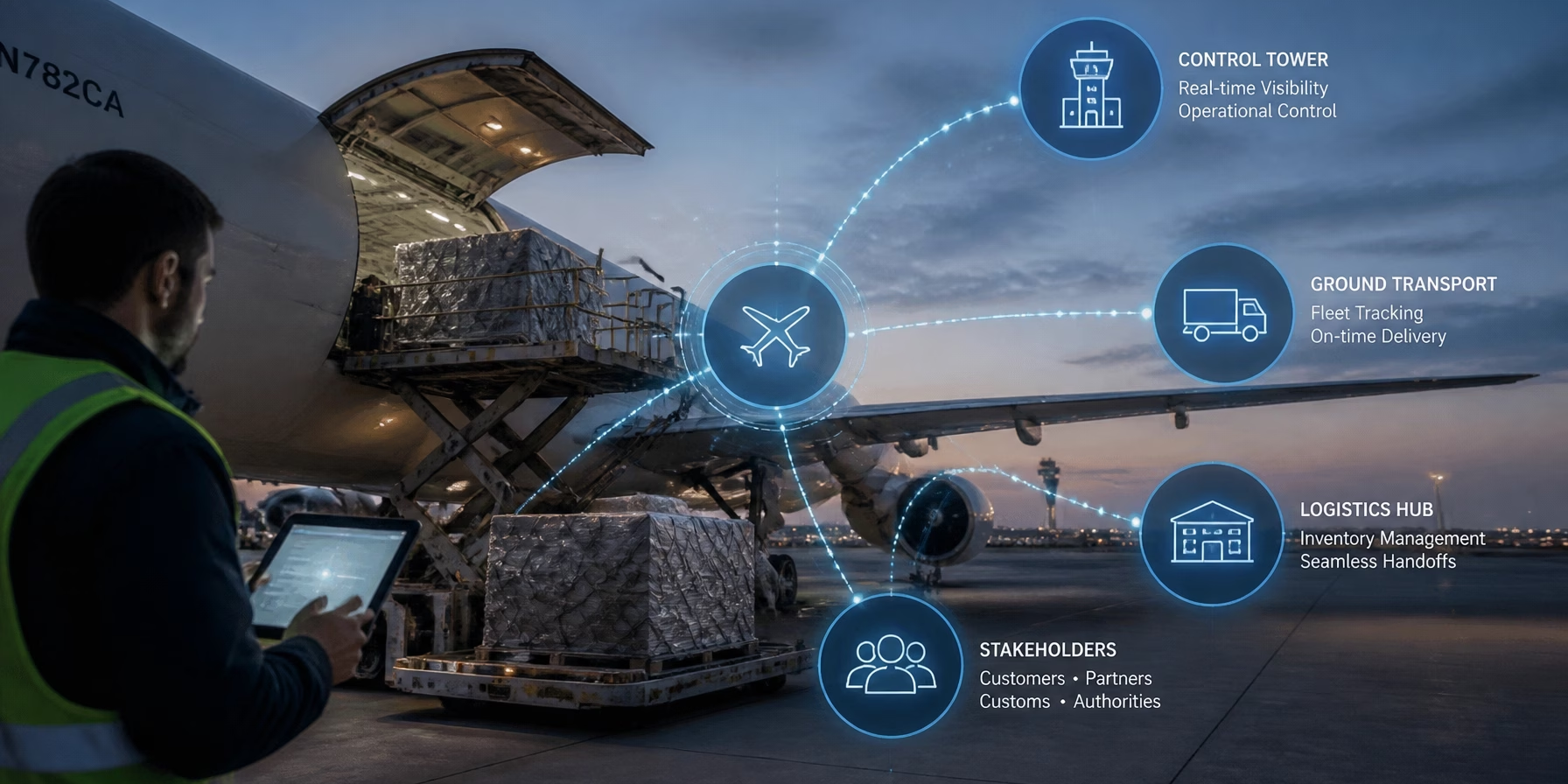
Plug-In Freight Ops™ is not designed to replace platforms like CargoAI, WebCargo, or your internal airline systems. Instead, it unifies them. It acts as a digital freight infrastructure layer that sits above existing tools to standardize the full shipment lifecycle.
Through the platform, freight teams can:
- Quote, Book, and Track: Centralize workflows across airlines, GSAs, and trucking providers.
- Coordinate Multi-Party Handoffs: Ensure visibility between carriers, forwarders, and trucking brokers.
- Access Predictive Milestones: Gain insights into delivery timelines without switching systems.
- Automate Reporting: Generate sales intelligence and AWB usage reports instantly.
By reducing "system switching," we eliminate the operational friction that slows teams down.

Why Adoption Matters More Than Features
The most significant differentiator of Plug-In Freight Ops™ is its adoption model. We focus on "Zero-Migration Deployment." There is no requirement to abandon your current carrier systems or undergo a multi-month IT overhaul.
The platform adapts to how you already work:
- For GSAs: Manage multiple airlines in one environment with unified sales intelligence.
- For Forwarders: Balance air and trucking movements with a single customer-facing visibility layer.
- For Airlines: Expand into new markets without a local sales office by leveraging a white-label digital presence.
As our founder Michelle DeFronzo says, "We built for adoption first because the best system in the world fails if teams won’t use it."
Measurable Operational Impact
The results of moving from a "fragmented tech stack" to a "connective infrastructure layer" are immediate. Operators using Plug-In Freight Ops™ report:
- 60–80% reduction in manual quoting activity.
- Faster speed-to-quote without increasing headcount.
- Fewer billing errors and AWB discrepancies due to structured data flows.
- Enhanced customer confidence through real-time visibility and audit-ready reporting.

Completing the Ecosystem
Rather than positioning itself as "the future of cargo," Plug-In Freight Ops™ focuses on solving the operational gaps of today. It recognizes that the future isn't about one giant system that does everything: it’s about an infrastructure layer that makes all your existing systems usable together.
In an industry tired of "silver bullet" software, this pragmatic, operator-led approach is why Plug-In Freight Ops™ is gaining traction where others have stalled. We typically prove that value through a 90-day pilot designed around real workflow breakdowns, stakeholder handoffs, and execution visibility requirements.
Ready to see how this fits your operation?
We typically address operational bottlenecks through a 90-day pilot. We can walk through how this would apply to your current environment and map it to your specific multi-stakeholder workflows.