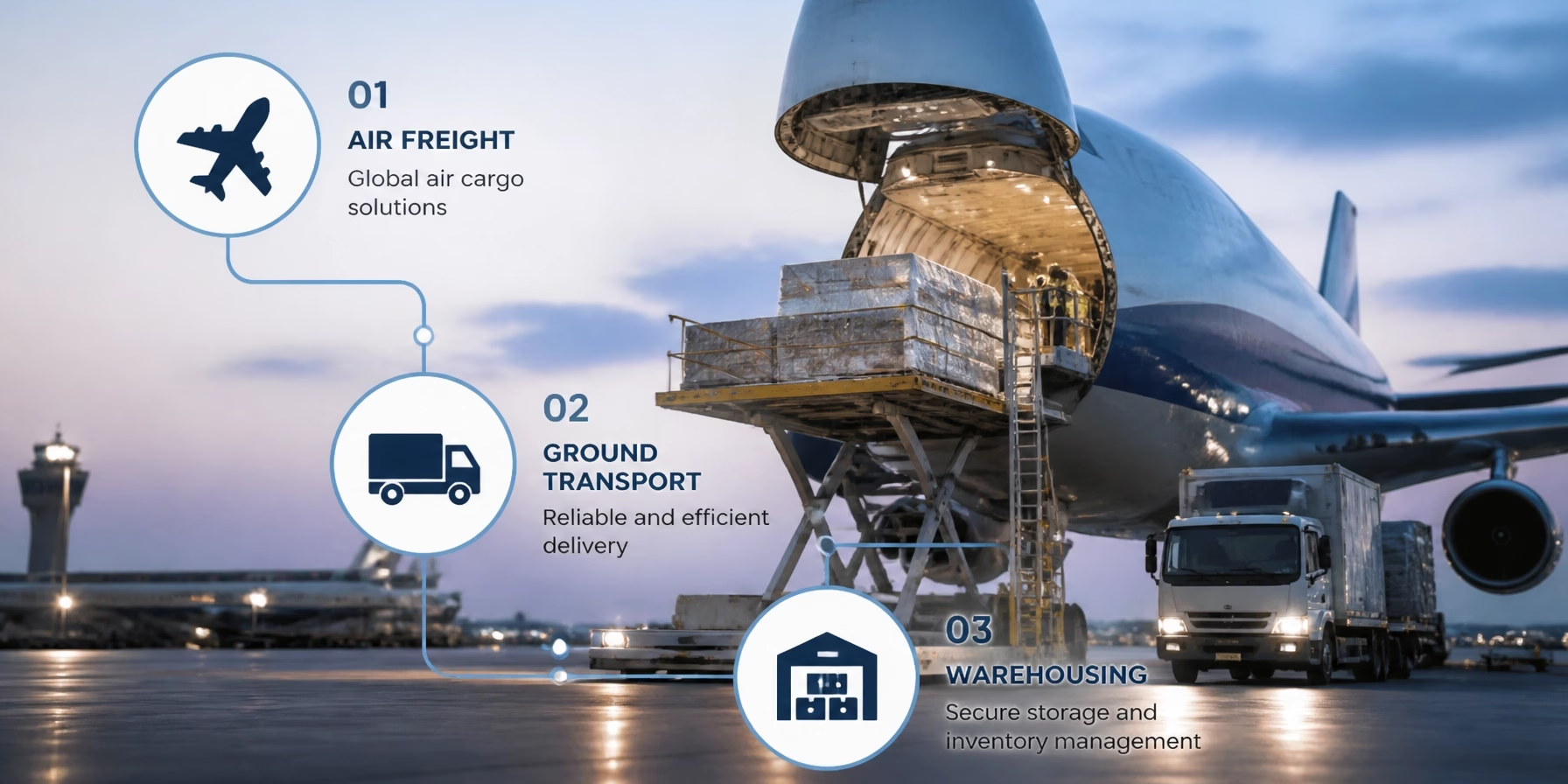
In 2026, the logistics industry has a visibility problem.
Not a lack of it: an obsession with it. We have more dots on maps, more IoT sensors on containers, and more real-time "control towers" than ever before. Yet, operations still break down at the handoff. Knowing that a shipment is stuck on a tarmac in a different time zone is "visibility." Having the infrastructure to coordinate the airline, the handler, and the trucker to fix that delay in real-time is execution accountability.
Visibility tells you that you’re losing money. Execution accountability prevents the loss from happening.
The Visibility Trap: Why Seeing Isn't Solving
The "Visibility Trap" is the false sense of security that comes from seeing a problem without having the structured power to influence its outcome. In a fragmented ecosystem, visibility often just provides a front-row seat to a slow-motion wreck.
When a multi-stakeholder shipment fails, the post-mortem usually looks like this:
- The airline saw the delay.
- The freight forwarder saw the delay.
- The trucking provider saw the delay.
- The government agency saw the delay.
Everyone "saw" it. Nobody was digitally coordinated to execute a solution across those organizational silos. This is where execution breaks down, and it is exactly why the current digital freight infrastructure is failing the people who move the world.

The Moment Everything Changed: From Chaos to Infrastructure
For decades, the cargo industry has normalized operational chaos. We accepted 200-email shipment chains, invisible handoffs, and reactive firefighting as "just how things work."
Michelle DeFronzo, CEO of ImEx Cargo, spent over 30 years inside airlines, freight forwarding, trucking, and government logistics coordination. She saw this pattern repeat at every level. The realization was simple but profound: The problem was never movement. The problem was coordination.
"For years, I thought operational chaos was just part of logistics," Michelle explains. "Then one day I stepped back and asked: Why are experienced teams still managing critical operations through endless emails and spreadsheets? Why are airports, airlines, handlers, truckers, and forwarders all working from different operational realities?"
That was the moment the thinking shifted. It wasn’t about building another digital freight marketplace or a new Transportation Management System (TMS). It was about building a digital execution infrastructure layer: a coordination layer designed to connect the ecosystem, not compete with it.
The Coordination Gap in 2026
Most logistics environments today are digitally rich but operationally fragmented. You likely have an ERP, a TMS, and perhaps even a specialized tracking tool. Your partners have theirs. But these systems don't "talk" in a way that drives accountability.
When execution is siloed, you face:
- Decision Latency: The time it takes to recognize a disruption and align stakeholders.
- Fragmented Accountability: No single "source of truth" for who is responsible for the next move.
- Manual Intervention: Humans acting as the "glue" between systems, leading to burnout and errors.
Plug-In Freight Ops™ was built to bridge this gap. Rather than replacing your existing systems, it sits above them to standardize execution across the full shipment lifecycle: from quote to booking to tracking and delivery.

What We’re Actually Building: A Connective Execution Layer
We aren't building "software." We are building the connective execution layer between the people already moving the world:
- Airlines & GSAs: Managing capacity and partner coordination.
- Freight Forwarders: Operating across multi-party flows.
- Government Agencies: Managing large-scale infrastructure and transportation programs.
- DBE Ecosystems: Ensuring diverse supplier participation is tracked and verified in real-time.
The industry already has systems. What it lacks is coordinated execution across participants. This is the foundation of digital freight infrastructure. It’s about moving from "tracking" to "triggering": where data automatically initiates the next accountable action in the chain.
Execution Accountability in Practice
Consider a high-priority vaccine shipment or a critical component for a municipal infrastructure project.
In a traditional "visibility-only" model, an alert might trigger if the temperature fluctuates or a truck is delayed. But then what? A flurry of phone calls begins. People are paged. The "chain of custody" becomes a chain of confusion.
In an Execution Accountability model via Plug-In Freight Ops™:
- The Trigger: The system detects the deviation.
- The Workflow: An immediate, pre-configured execution handoff is sent to the specific stakeholder responsible for the fix.
- The Verification: The system logs the resolution, providing an audit-ready trail of performance.
- The Transparency: All stakeholders: including government oversight and prime contractors: see the resolution in real-time.

Reducing Risk, Not Just Recording It
The value of a digital execution layer isn't just in the tech: it's in the outcomes. By implementing a standardized coordination layer, organizations typically see:
- Reduced Operational Risk: Fewer "dropped balls" at the handoffs between truckers, handlers, and carriers.
- Improved Performance Tracking: Real-time metrics on partner accountability, not just shipment location.
- Simplified Compliance: Automated reporting for DBE (Disadvantaged Business Enterprise) and sustainability requirements.
- Increased Speed: Faster response times to disruptions through automated execution triggers.
Moving Beyond the Dashboard
The future of logistics isn’t more disconnected software or prettier dashboards. It’s operational alignment. It’s knowing that when a shipment moves from an airline to a trucker, the data moves with it, the accountability moves with it, and the execution is seamless.
"Ecosystems don’t fail because freight moves," says Michelle DeFronzo. "They fail when execution isn’t aligned."
Stop managing chaos and start managing execution. We don't just help you see your logistics network: we help you coordinate it.

Pilot Discussion: A Focused 90-Day Rollout
We don't expect you to rip and replace your current technology. Our approach is to layer coordination over your existing operations.
We typically address this through a focused 90-day pilot. This allows us to:
- Map your current execution environment and identify the "coordination gaps."
- Integrate the Plug-In Freight Ops™ layer with your key stakeholders.
- Demonstrate real-time execution accountability on live shipments.
We can walk through how this would apply in your specific operational environment: whether you are an airline managing capacity or a prime contractor overseeing a major infrastructure project.
Are you ready to move from seeing the problem to fixing it in real-time?