For years, the logistics and transportation industry has operated under a single, dominant assumption: The biggest problem is finding people.
We build talent pipelines. We invest in massive recruiting campaigns. We launch training academies to bridge the "skills gap." But if you look closely at the operational front lines: the airlines, GSAs, and forwarders managing complex cargo flows: the data tells a different story.
The challenge isn't finding people. The challenge is keeping them.
In a recent market insight poll, logistics leaders were asked what their primary workforce concern was. While "Finding Qualified People" and "Training New Hires" were expected favorites, they were largely overshadowed by one clear winner: Retention.
Industry leaders aren’t saying "We can't find talent." They’re saying, "We can't keep talent once we train them."
The Hidden Cost of the "Revolving Door"
When an experienced employee leaves a logistics operation, the cost is far higher than the price of a LinkedIn job posting. In 2026, industry estimates suggest that replacing a specialized logistics or air cargo employee can cost anywhere from 40% to 200% of their annual salary.
But even that number is misleading. The true cost isn't just financial: it’s operational.
In most logistics environments, critical knowledge lives in the heads of a few "hero" employees. This is what we call Tribal Knowledge. It includes:
- The undocumented shortcuts that keep ground operations safe.
- The informal relationships with truckers and handlers that resolve delays in minutes.
- The "gut feeling" for prioritizing shipments during irregular operations (IROPS).
When an employee walks out the door, that knowledge leaves with them. You aren't just losing a person; you’re losing a piece of your company’s "brain."

Why They Leave: The Burnout of Fragmentation
Logistics is inherently stressful, but it shouldn't be chaotic. The primary driver of burnout in air cargo and supply chain roles isn't just the workload: it's the fragmentation.
When systems don't talk to each other, execution breaks down. Employees are forced to spend their shifts "firefighting": chasing status updates through endless email chains, manual spreadsheets, and frantic phone calls. This constant state of crisis creates a culture of heroics where productivity depends on an individual's ability to navigate chaos.
This environment is unsustainable. High-performing employees leave because they are tired of being the "glue" that holds broken processes together.
As we've discussed previously, AI strategy fails without digital infrastructure because it can't fix a broken execution layer. The same is true for your workforce: you cannot "train" your way out of a fragmented system.
Execution Infrastructure: Building a System that Remembers
To solve the retention crisis, we have to move the conversation from Workforce Development to Workforce Resilience.
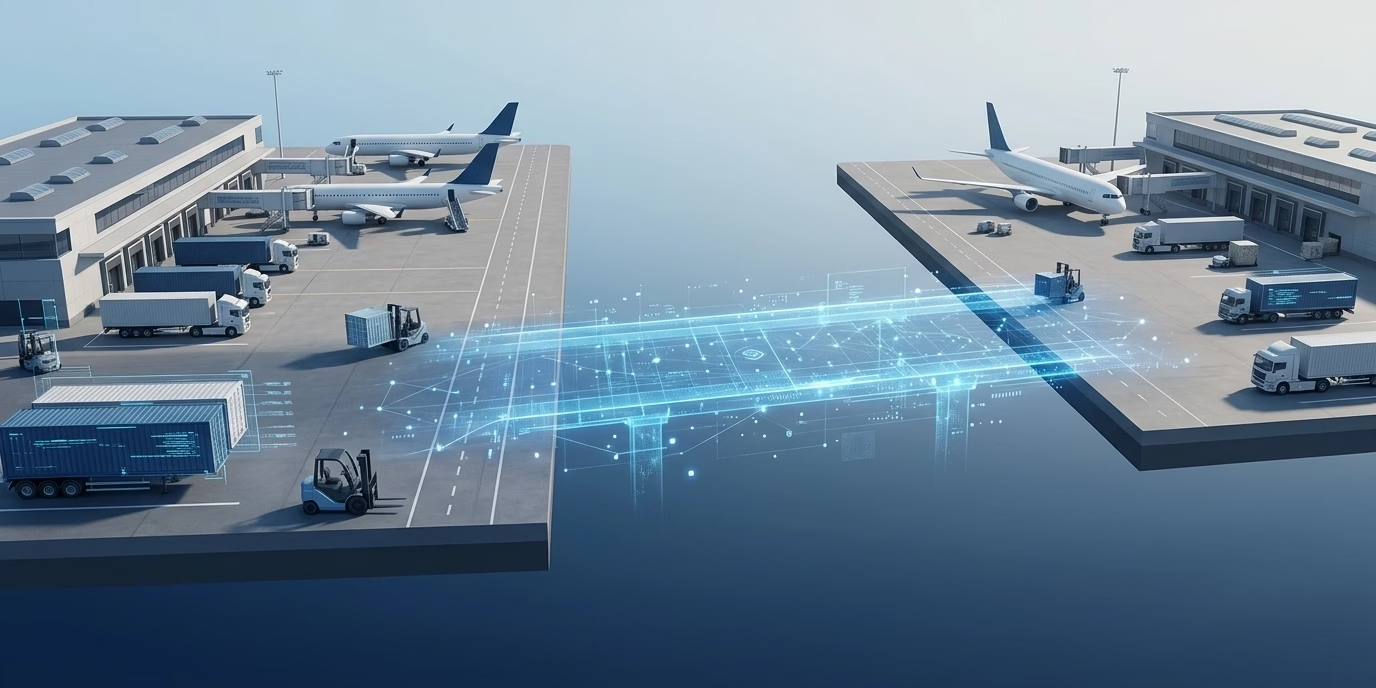
The goal should not be to find more people to throw into the fire. The goal is to build an execution infrastructure that reduces the dependency on individual heroics and captures operational knowledge within the system itself.
This is where Plug-In Freight Ops™ enters the equation.

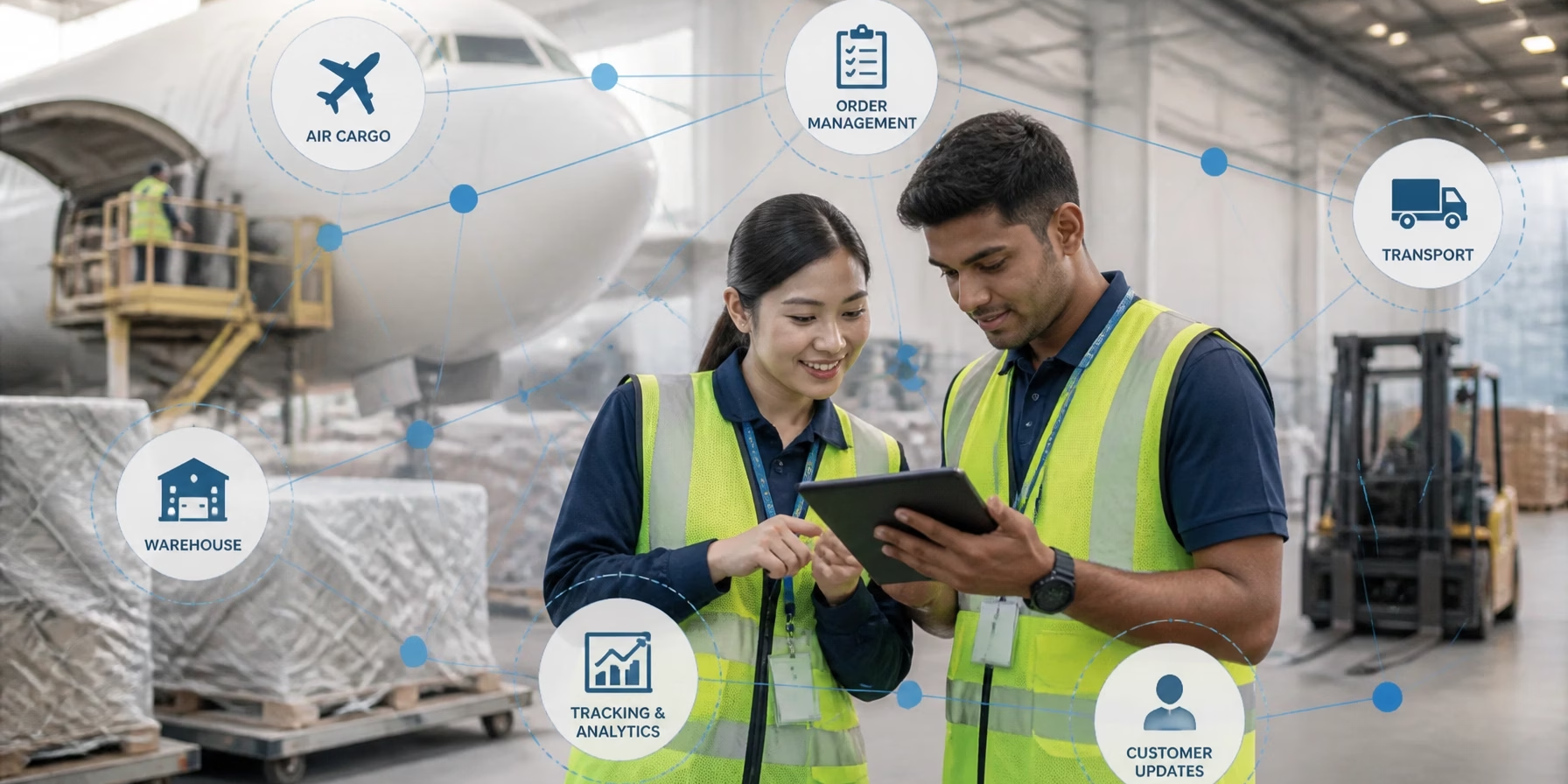
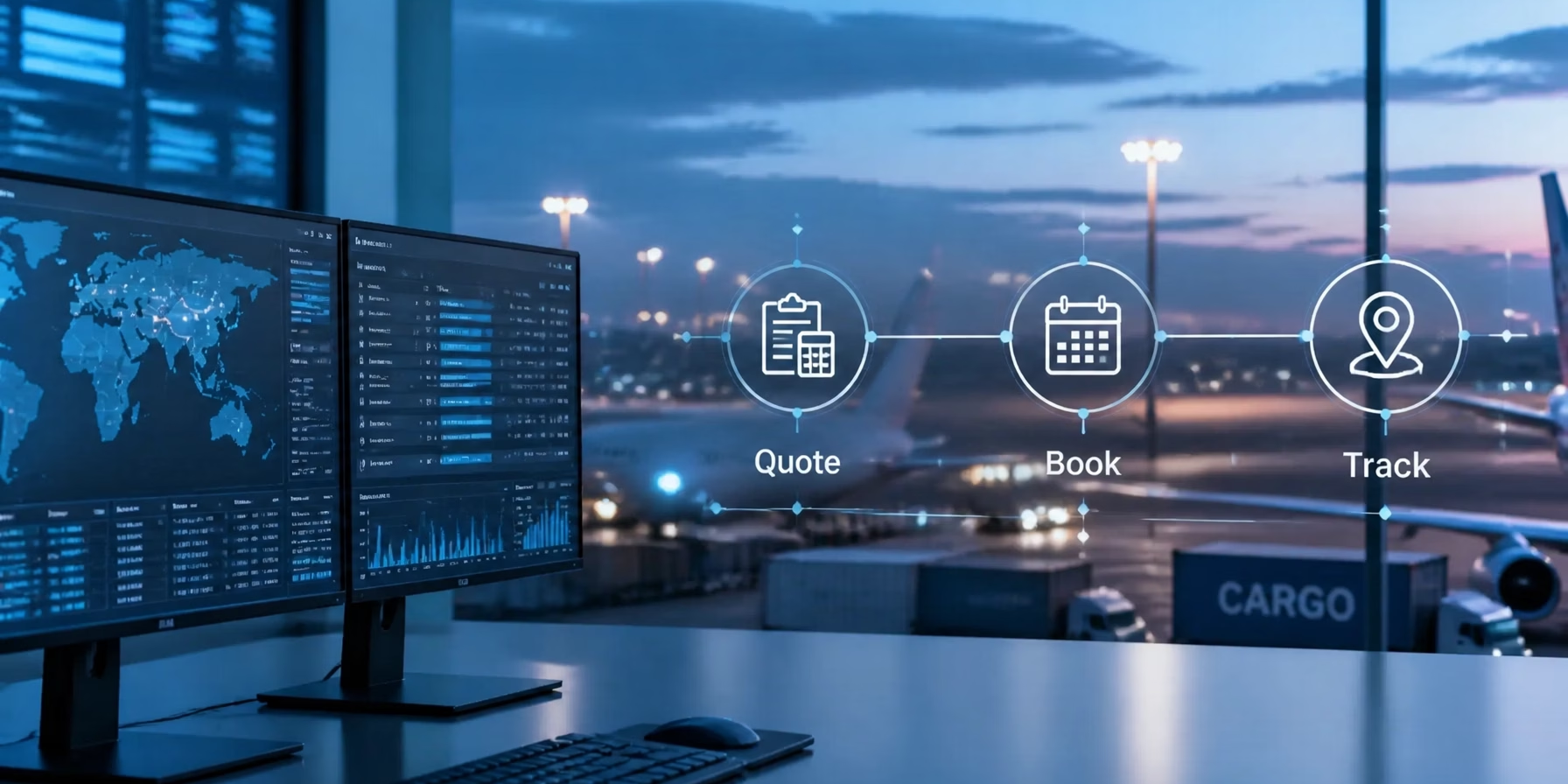
Rather than adding another siloed tool, Plug-In Freight Ops™ acts as a digital execution layer that standardizes workflows across the full shipment lifecycle: from quote to booking to tracking and delivery. It creates a "single source of truth" for execution, which has two transformative impacts on your workforce:
1. It Reduces Burnout through Predictability
By standardizing handoffs and providing real-time visibility across stakeholders, the platform moves the team from firefighting to executing. When a dispatcher or cargo handler has clear tasks, automated alerts, and structured workflows, the cognitive load drops. Work becomes manageable, transparent, and fair.
2. It Protects Institutional Knowledge
With Plug-In Freight Ops™, the "how" of your operation is captured in the system. Decisions, handoffs, and stakeholder requirements are documented as they happen. If a key employee leaves, the business doesn't grind to a halt. The next person can step in and see exactly where things stand, because the execution accountability lives in the infrastructure, not just in an individual's inbox.
From Hiring People to Activating Ecosystems
At ImEx Cargo, we believe Workforce Activation is a critical part of the logistics ecosystem, but it must be paired with operational resilience.
Our mission with the ImEx Cargo Academy isn't just to produce more experts; it's to integrate them into an environment where they can succeed long-term. This model becomes more effective when supported by Workforce Development Partnerships that connect training, employer demand, and execution readiness across the logistics ecosystem.

By combining Workforce Activation with a robust Execution Layer, organizations can:
- Accelerate Onboarding: New hires reach full productivity faster when the workflows are already structured.
- Reduce Operational Risk: Ensure continuity even during high turnover periods.
- Improve Accountability: Set clear performance benchmarks for internal teams and external partners.
This is where Workforce Ecosystem Infrastructure matters. It creates the coordination layer needed to align workforce pipelines, operational workflows, and partner accountability in one structured environment.
The Shift in Strategy
The industry must stop treating workforce and technology as separate silos.
If you are an airline, a GSA, or a prime contractor responsible for complex logistics projects, the question isn't whether your employees will leave. In the modern labor market, they eventually will. The real question is: Does your operation walk out the door with them?
We typically address this challenge through a focused pilot program that maps your current execution gaps and demonstrates how a digital infrastructure layer can stabilize your workforce. For organizations ready to move from concept to execution, our Workforce Activation Pilots provide a practical starting point.
Ready to build a more resilient operation? Let’s walk through how this would apply in your specific environment. If you're exploring how this model connects to your operational needs, you can also review how we engage with Employer Partners as part of a broader workforce execution strategy.
Contact ImEx Cargo to start a pilot discussion today.